
2021-08-30
Office noise cancellation for employee productivity and safety
Many employers mistakenly believe they need a creative workplace to attract the best talent. But after long hours in the office, employees increasingly prefer a quiet place to work rather than a beer garden or a giant candy wall.
According to a Udemy report on workplace distractions in 2018office noise is the second largest drop in productivity, second only to chatty colleagues.
Here are five ideas to consider when setting up your office.
1. Choose the right workplace design
Avoid a completely open office. In other words, an open office plan can foster flexibility and collaboration, but its inherent lack of noise control can hinder productivity. Consider an activity-based working (ABW) office instead of an open-plan layout.
The ABW environment has dedicated meeting and brainstorming spaces as well as more relaxed activities such as focused work. There may be phone booths where employees can confidentially answer calls without disturbing their colleagues. You can also take steps to reduce noise by placing high-traffic areas such as lounges, kitchens, and conference rooms away from workstations.
2. Choose the right office furniture
Modern office design leans more towards minimalism with bare floors and exposed ceilings. And while this does create a clean look, it also means there is nothing to absorb sound.
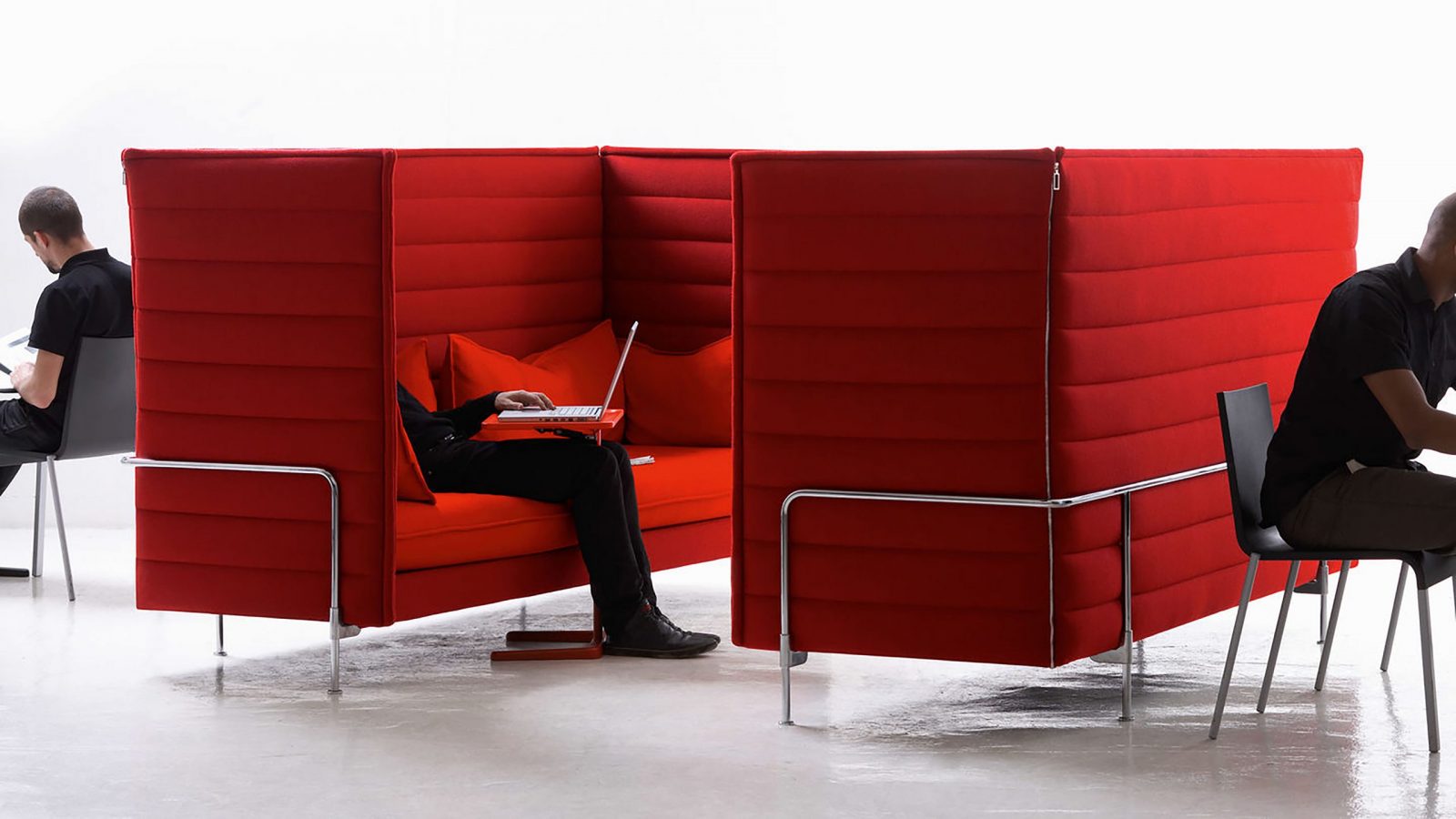
Fortunately, the growing popularity of a more open and flexible work environment has led to an increase in the availability of sound absorbing office furniture. Also known as acoustic furniture, these items come in specific sizes and fabrics designed to reduce office noise.
Acoustic furniture can be used to create a small collaboration area where employees can hold a meeting, as in this example:
3. Install the sound-absorbing elements
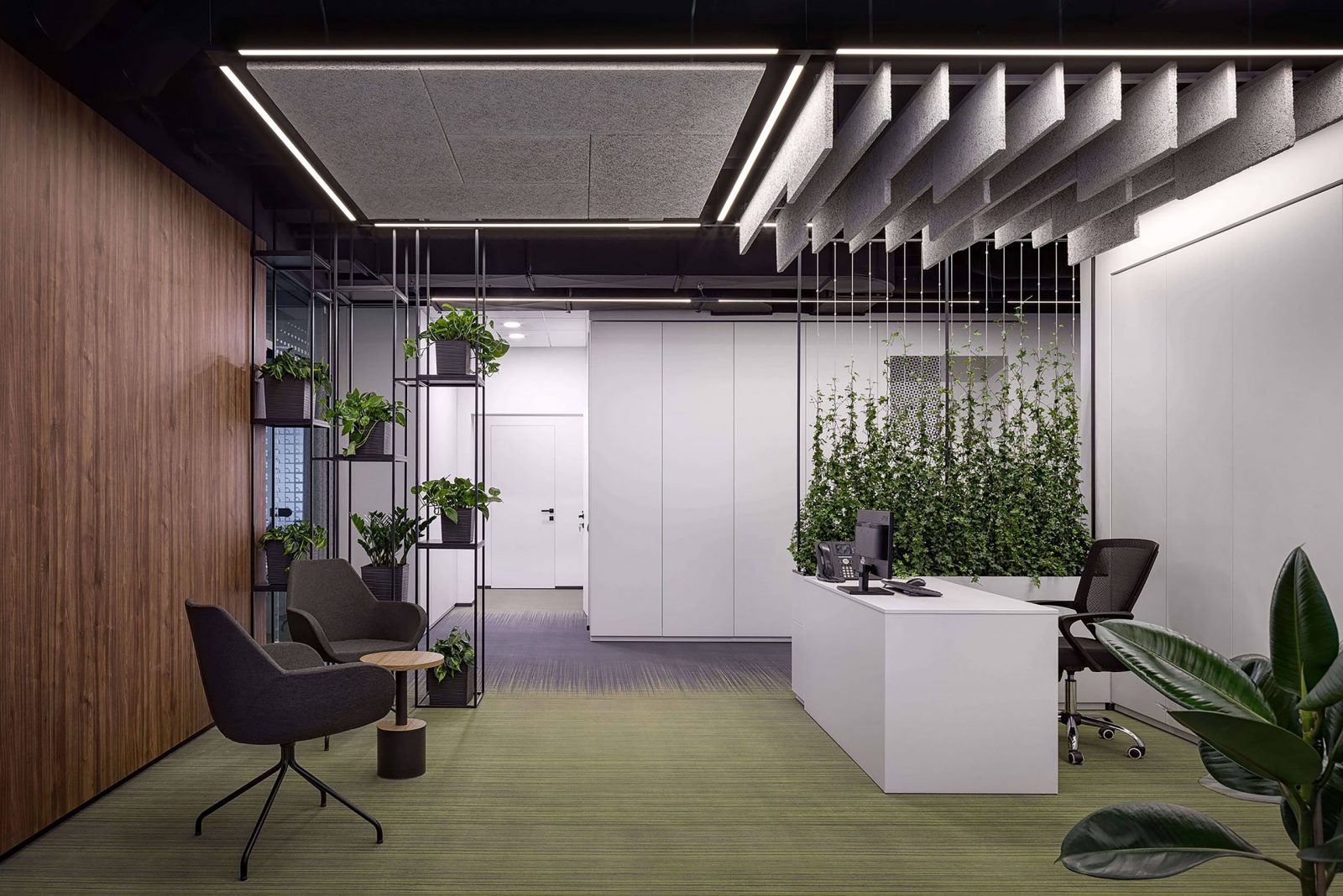
Along with acoustic furniture, acoustic ceiling islands or panels can be installed. The islands are suspended horizontally from the ceiling and are ideal for workplaces with limited wall space. They not only reduce the noise level, but also control the reverberation of the sound.
The panels are suspended vertically from the ceiling and are best suited for offices with high ceilings. Since all sides of the panel are open, it has a large surface area and a great ability to absorb sound.
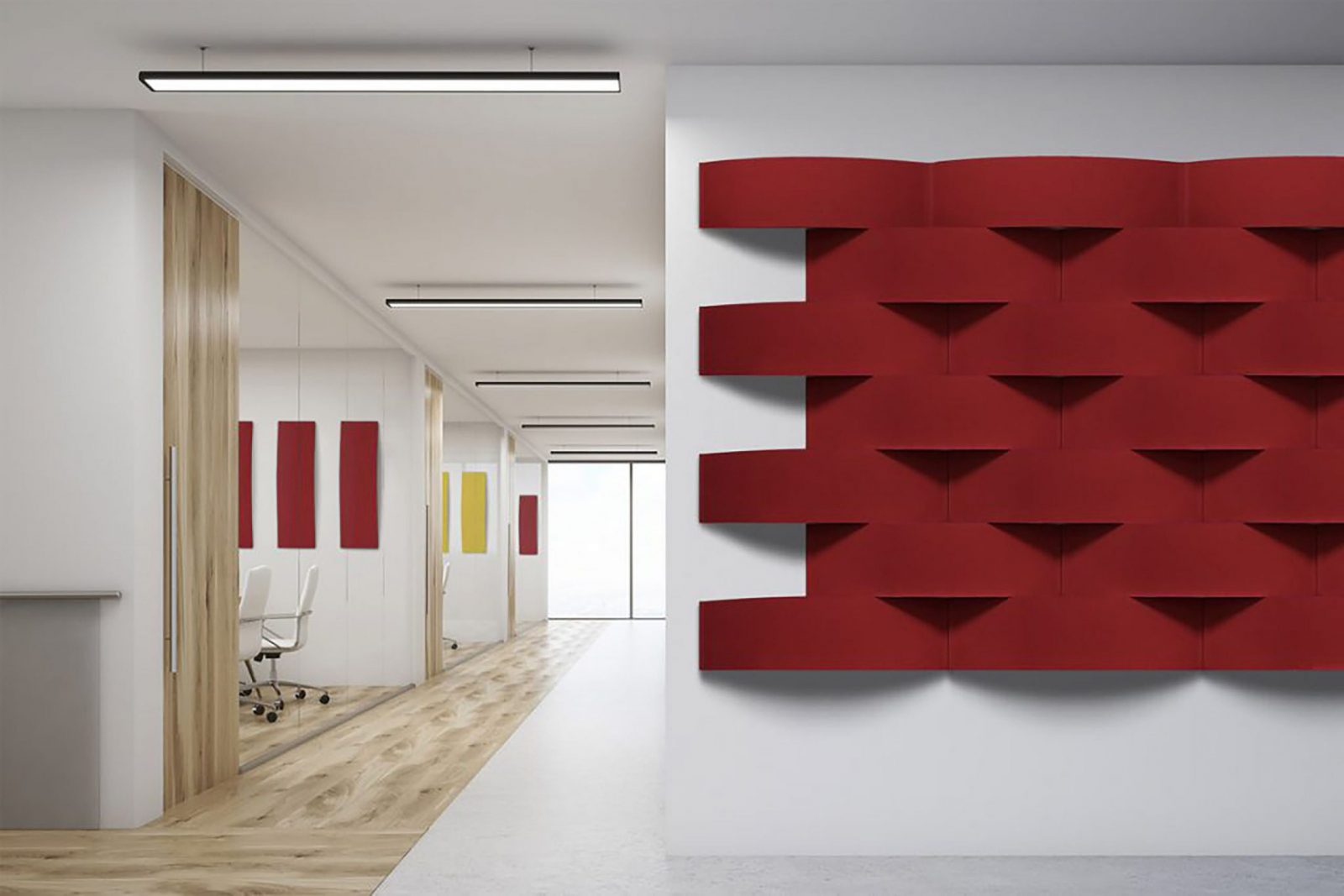
If your office has lower ceilings, acoustic wall panels are a good alternative to islands and ceiling panels.
4. Install a floor that minimizes office noise
Carpeted floors are one of the fastest ways to noticeably reduce office noise. There are many types of carpet to suit your needs in terms of both maintenance and aesthetics. But you are not limited to one carpet.
One alternative is vinyl (PVC) tiles, which have grown in popularity over the past decade. PVC is available in a wide variety of designs that are similar to natural stone or hardwood and offer many advantages over both. Its installation, cleaning and maintenance are significantly less expensive. It is also more durable than hardwood or stone and lasts longer. And best of all, it absorbs sound more efficiently than other hard-surface flooring options.
Also, when designing an office, it is very important to choose the right floor covering for space zoning. For example, for transit and areas with high traffic, PVC laying is well suited, due to its strength, it will retain its presentable appearance for a long time. In meeting rooms, offices and recreation areas, carpet made from durable synthetic fibers is chosen. This type of carpet is characterized by high wear resistance and excellent acoustic properties.
5. Add ambient office noise
V meta-analysis, performance research laboratoriesOn the impact of noise on human performance, researchers found that intermittent speech has a greater impact on a person’s ability to perform cognitive tasks (such as working with numbers, reading and understanding text) compared to continuous speech or ambient noise. The problem is that choppy speech has a lot of variation in volume and rhythm, which means it is more difficult for our brains to tune it.
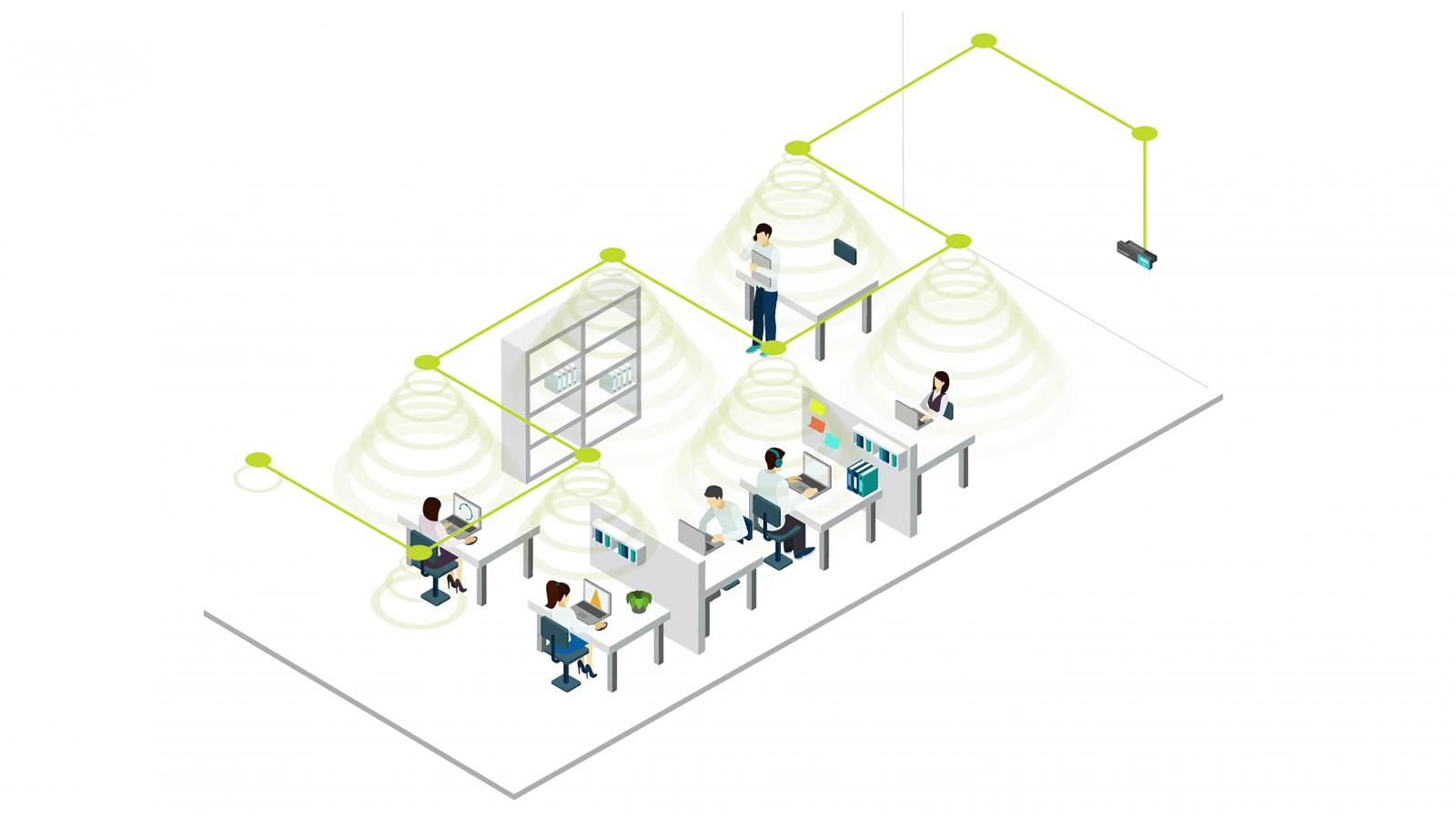
Thus, when the previous strategies involve minimizing office noise by reducing it, the latter method minimizes office noise by increasing it using a sound masking system. Sound masking is an airflow-like ambient sound that is specially designed to match the frequency of human speech. Sound masking does not remove sound or eliminate all speech noise in the environment; it simply reduces the distance at which conversations can be heard and understood by others, which is called the radius of distraction.
Paying attention not only to design in the office, but also to acoustic comfort, you are able to maintain the effective work of staff at a high level, which will allow you to retain your team and attract new specialists.