For a business centre in Limassol, we delivered the full design cycle — concept, 3D visualisations, working drawings, and FF&E specifications — across 1,269 m² of common areas, office spaces, the conference level, and a rooftop terrace. The project is under construction. What follows is the logic behind the decisions and our approach to commercial buildings of this class.
2025
Business Centre in Limassol
Customer
Private client
Area
1269 sq.m.
Location
Limassol, Cyprus
Status
Implementation process


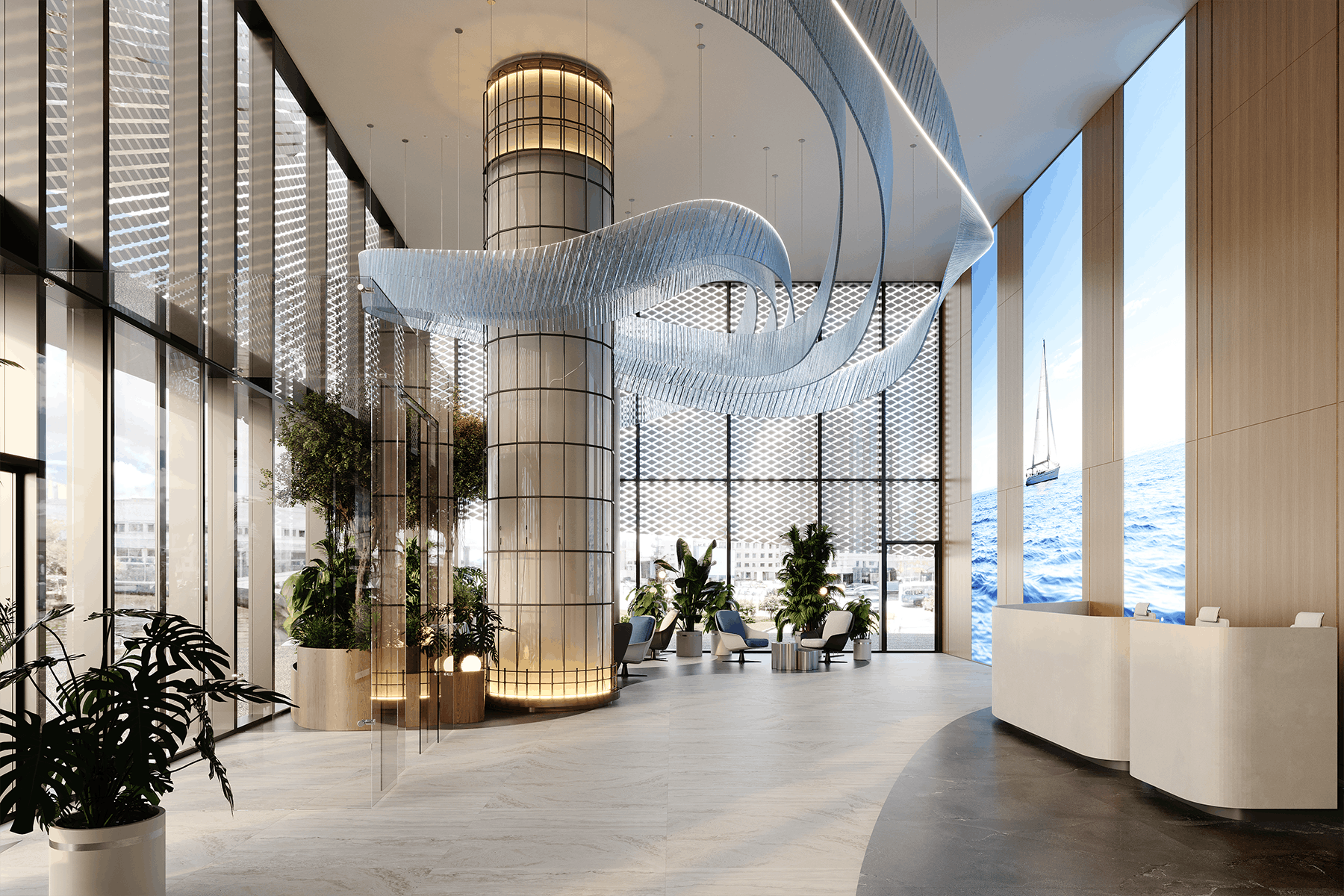
The Concept
The maritime plasticity runs through the entire building, but sounds different on every floor. That’s how you avoid the kind of design fatigue typical of large business centres — where the same moves get repeated from lobby to restroom.
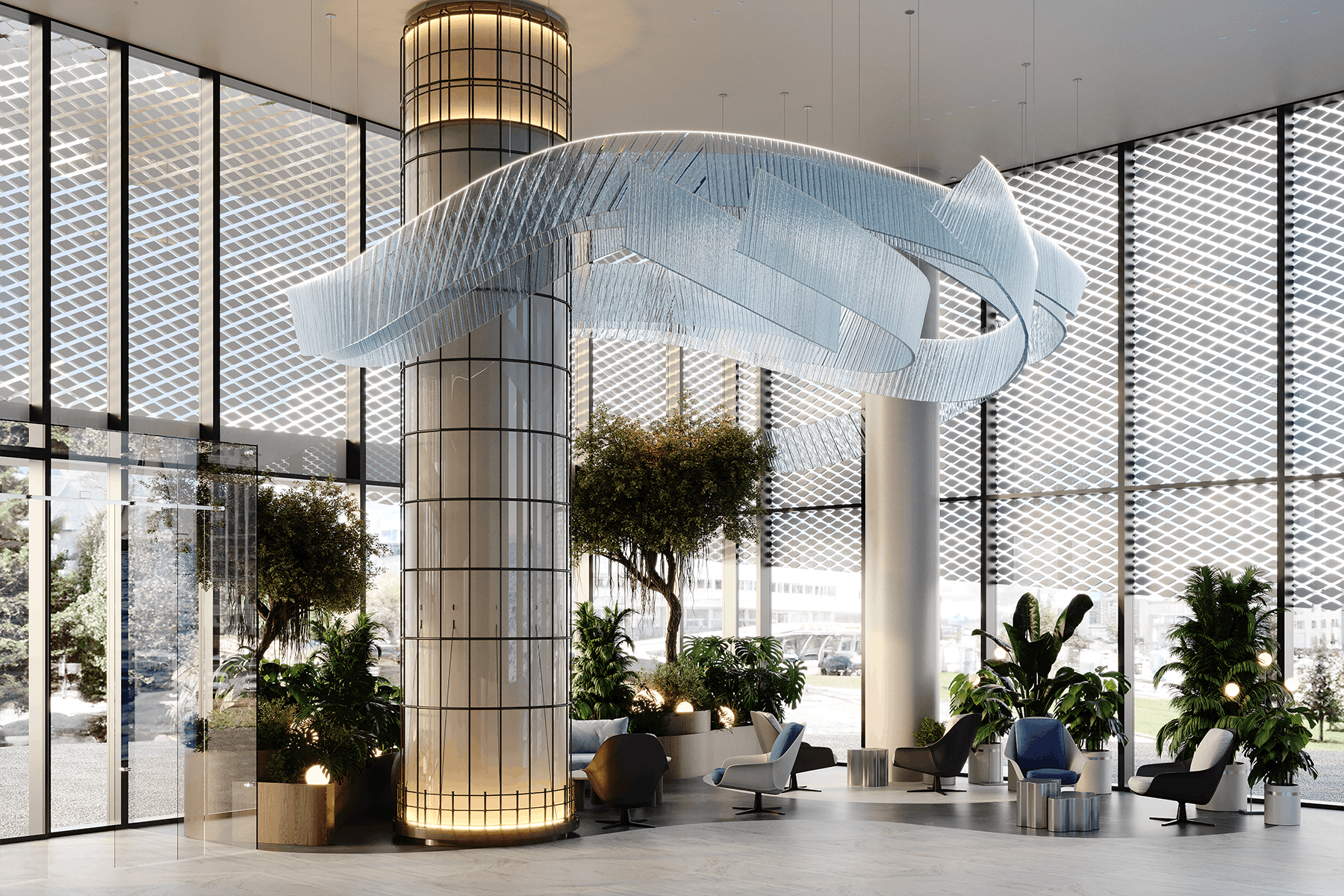
Palette: A Warm Base with Accent Notes
The base is built from beige and sandy tones. They create a neutral, calm background that holds over time and doesn’t fight tenants’ brands. Blue accents are used sparingly — mostly in lighting fixtures, selected furniture, and detail. The restraint is deliberate: make the colour of the sea the dominant note and the space starts reading as a hotel rather than a workplace.
The Plastic Wave in the Lobby as a Spatial Anchor
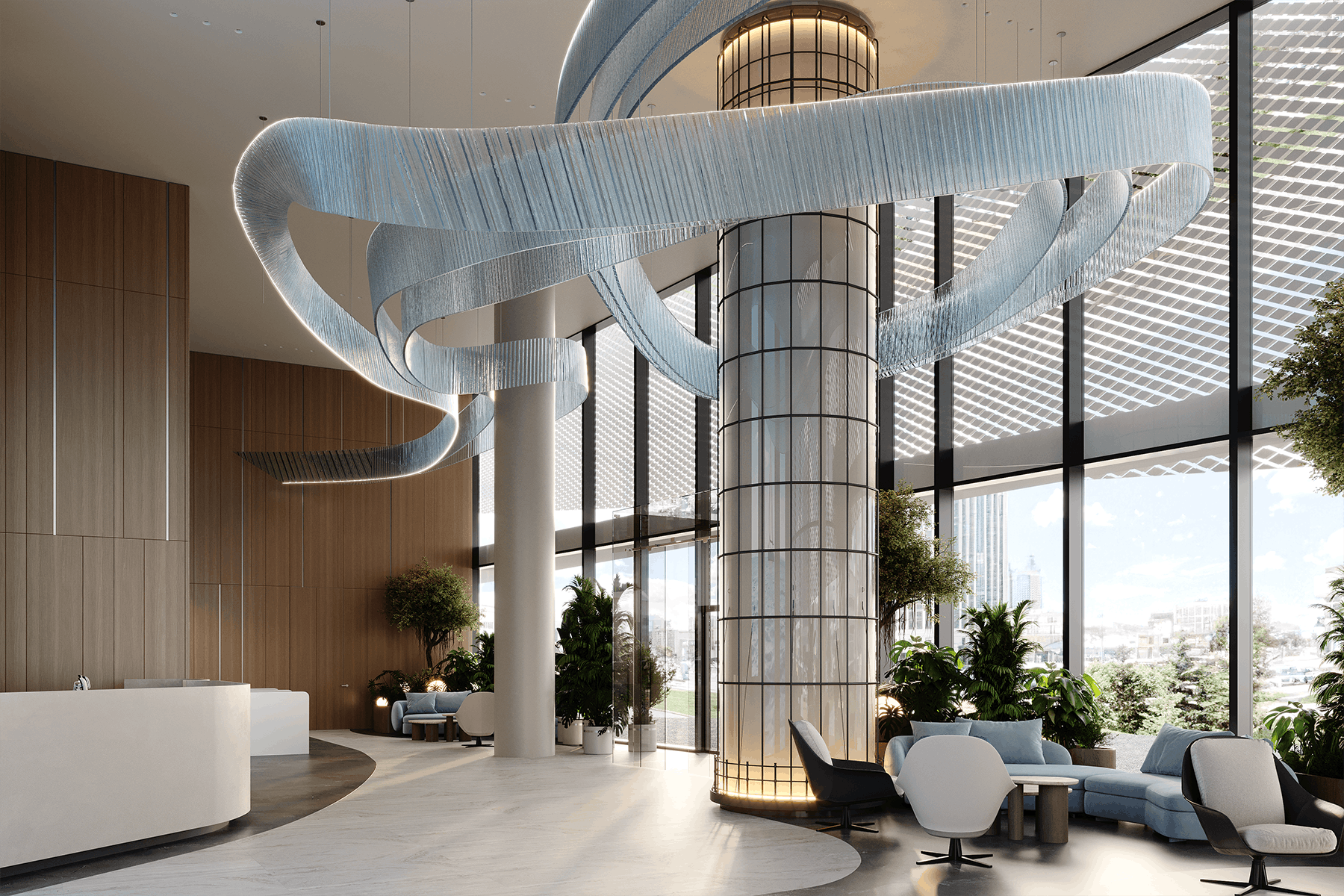
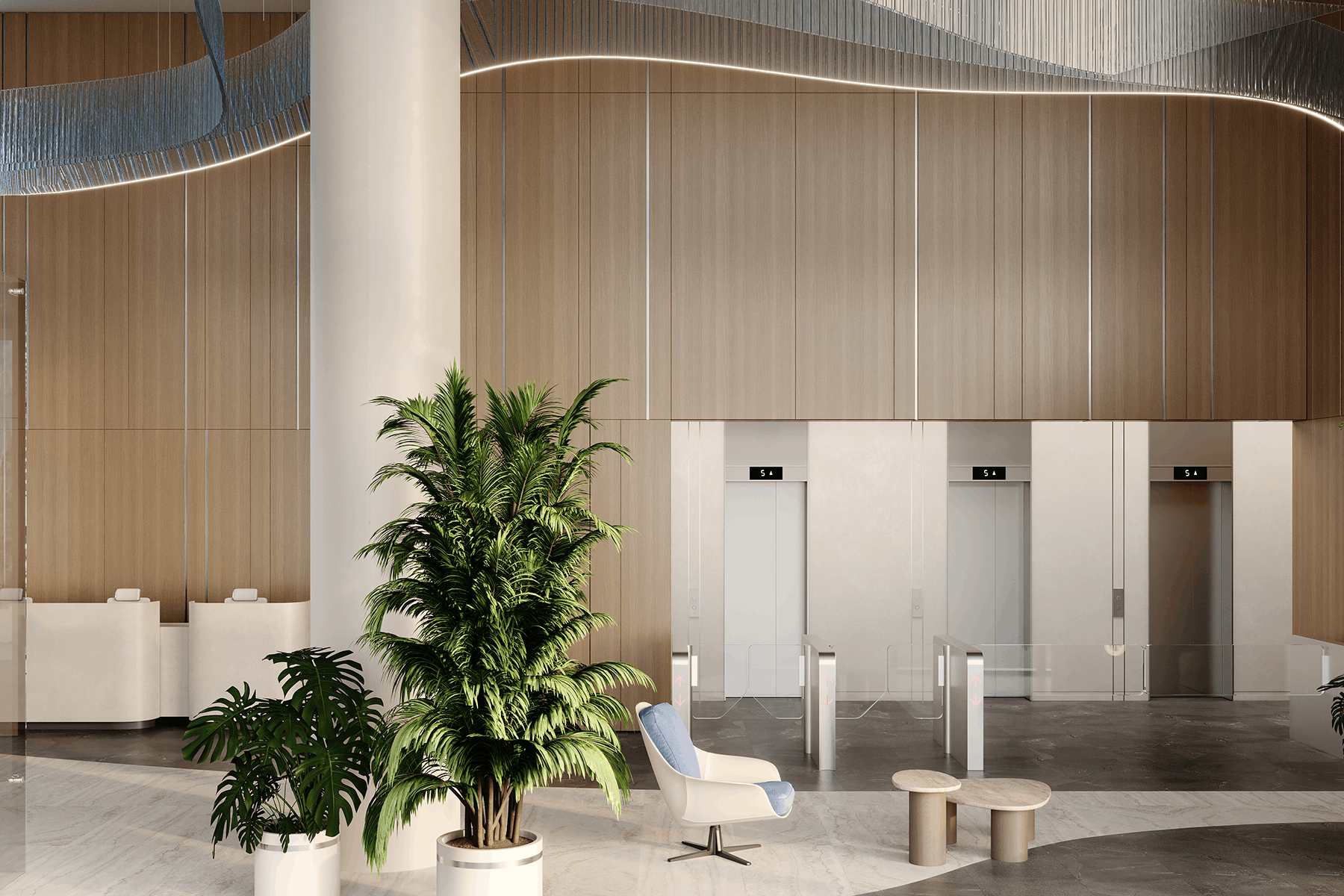
At the centre of the lobby is a large ceiling installation in plexiglass. The form suggests a sea current or an unfurled sail; the ribbed texture catches and redirects light so that delicate shifts appear across the surface, close to the glints you see on water. The material was chosen for performance, not effect: plexiglass is lightweight, formable, and doesn’t load a tall ceiling with visual mass. For the visitor, the installation becomes a natural navigational marker — it pulls the eye and then the step from the entrance deeper into the building.
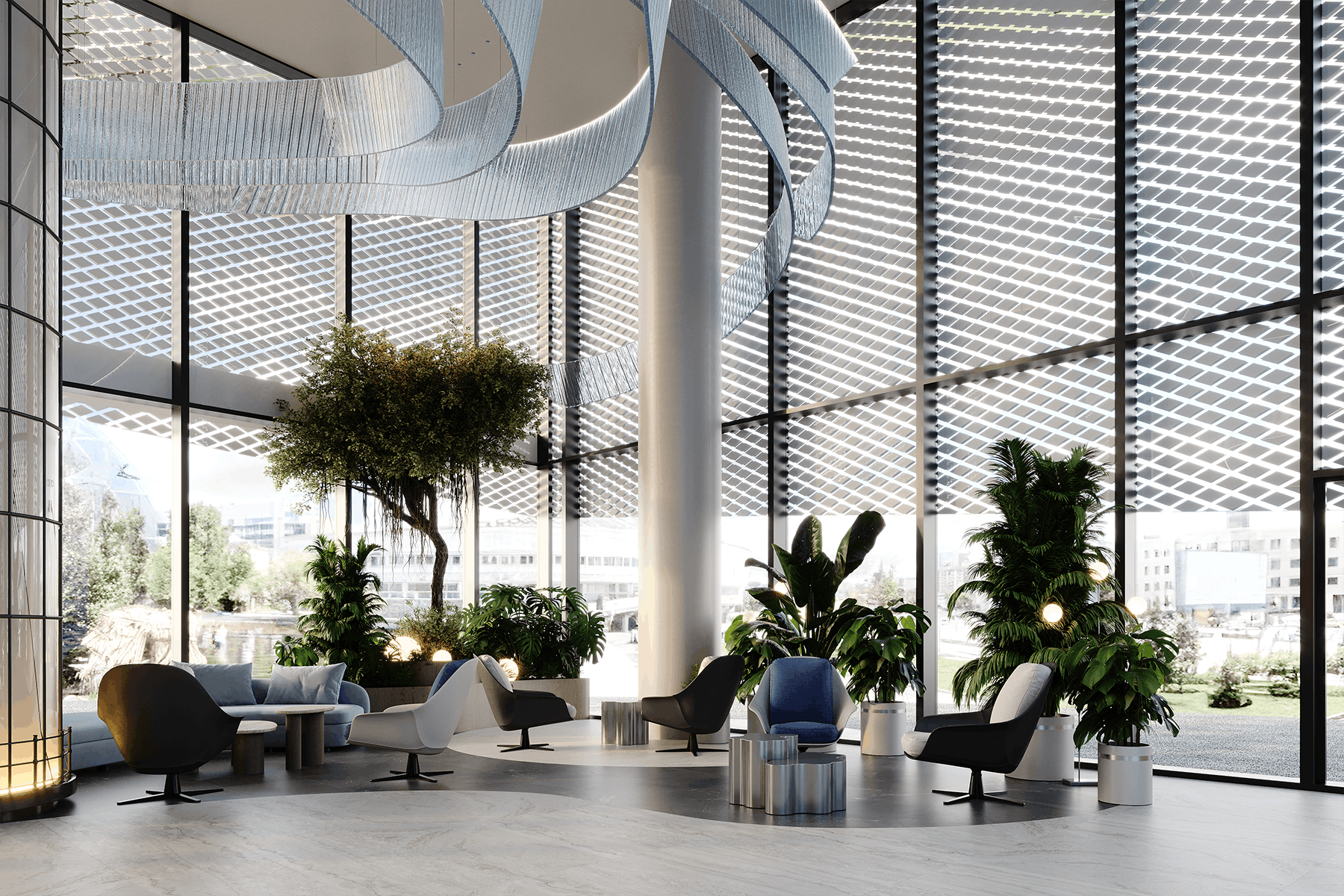
Biophilic Elements as Function
The large planted compositions aren’t there for “greenery” — they’re there to break up the scale: a tall, open lobby without visual pauses tires the eye quickly. The living islands form soft spatial markers, create intimate micro-zones for short conversations, and balance the geometry of the ceiling against human scale.
Scenario Architecture: Five Floors, Five Functions
A business centre isn’t one space — it’s a sequence of rooms. We designed this one as a story with a beginning and an ending: each level plays its own role in the working day, and the maritime language speaks differently depending on the role.
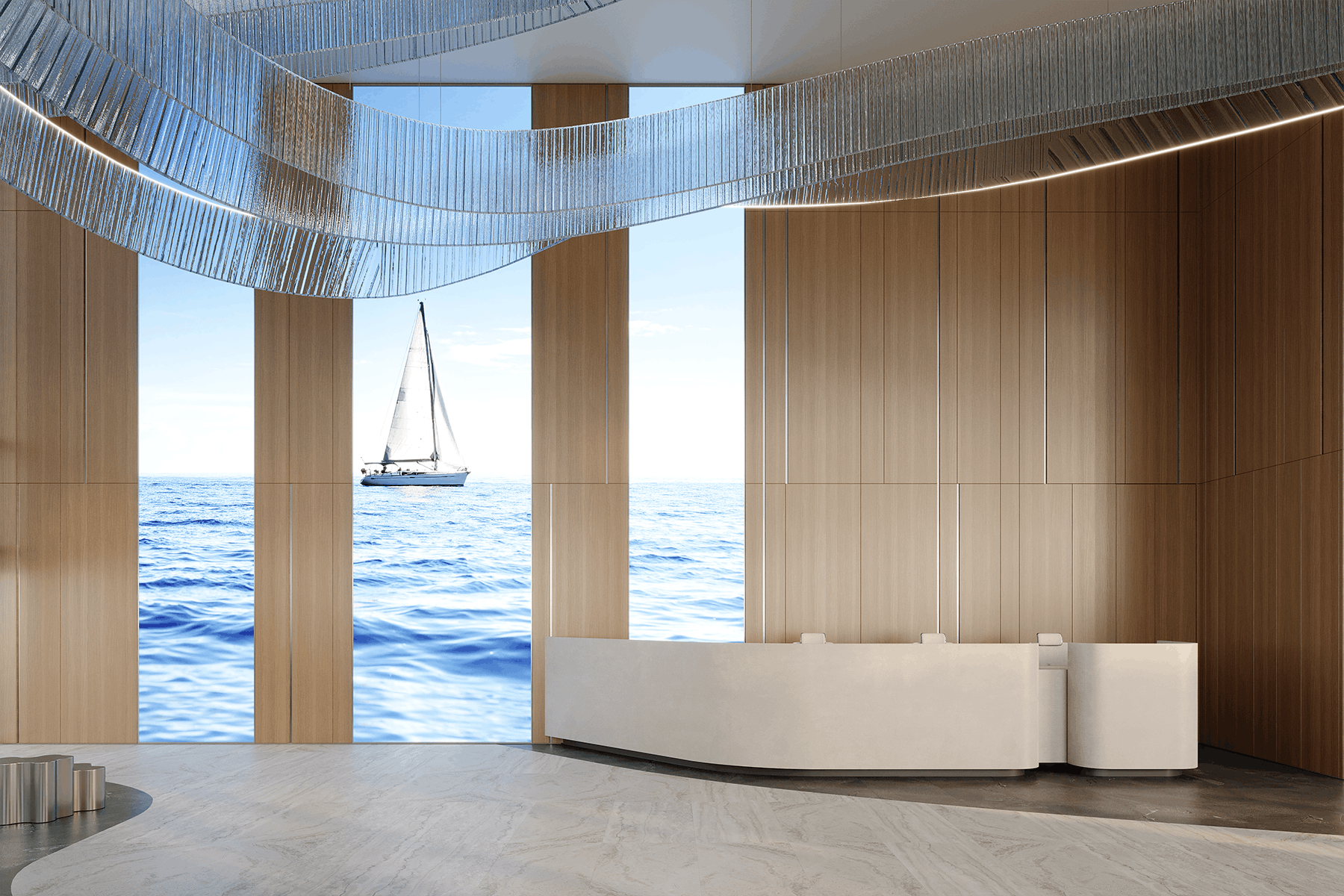
The Lobby — the Manifesto
This is where the concept speaks loudly: the wave overhead, full-height glazing, the sandy palette, the planted islands. The first 30 seconds define how the visitor will read the rest of the building — and the lobby carries that impression directly.
Office Floors — Concept Becomes Function
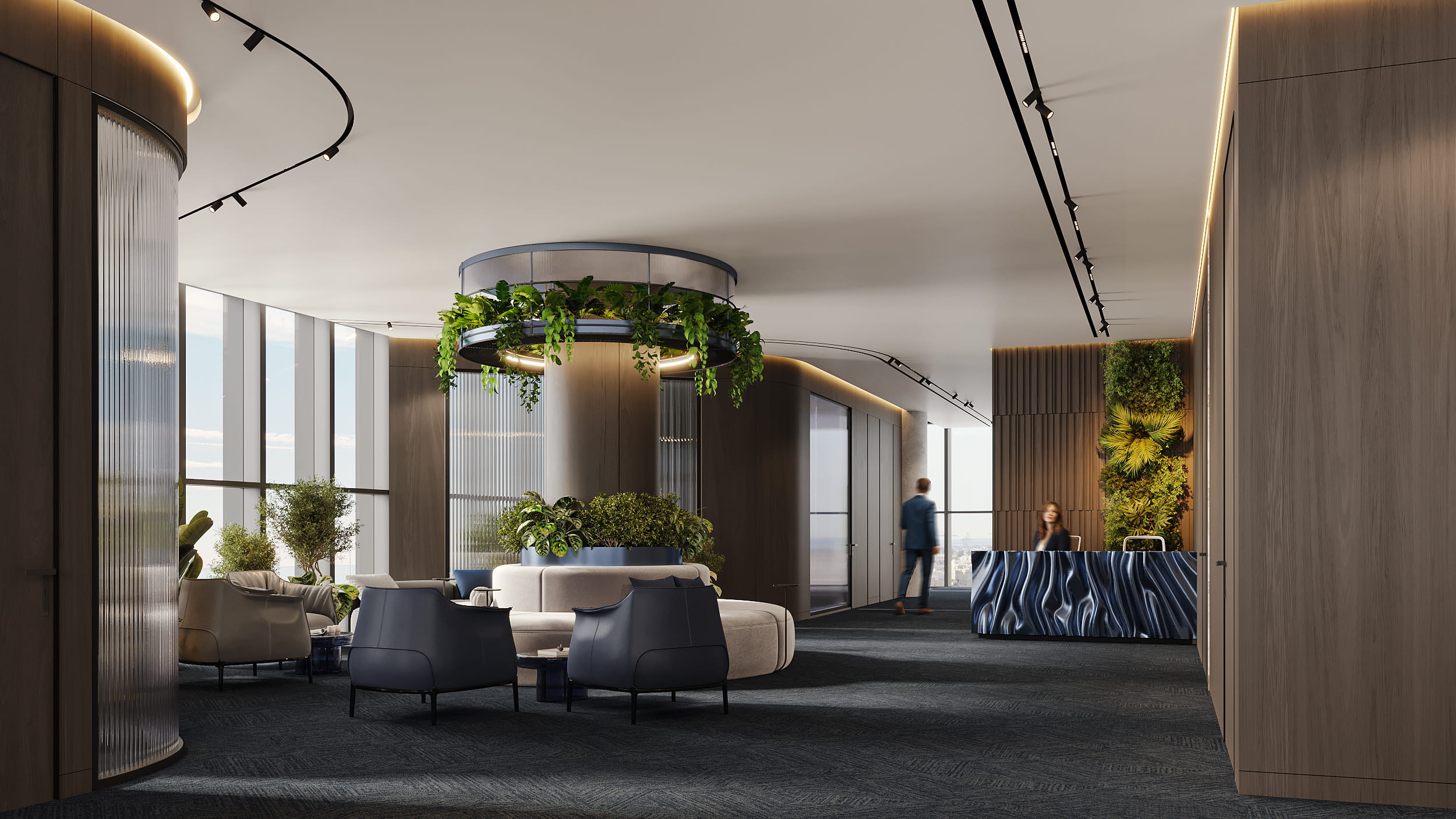
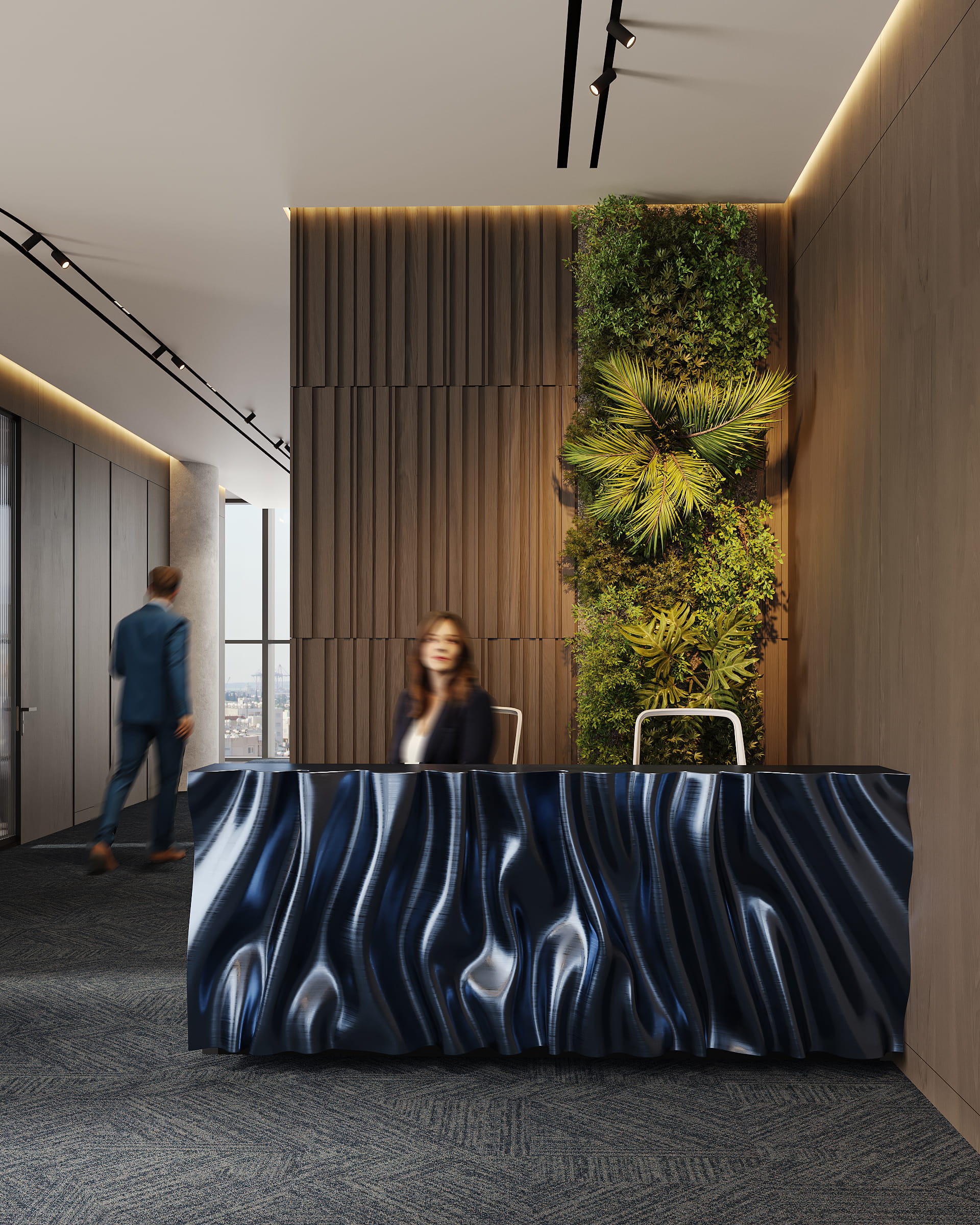
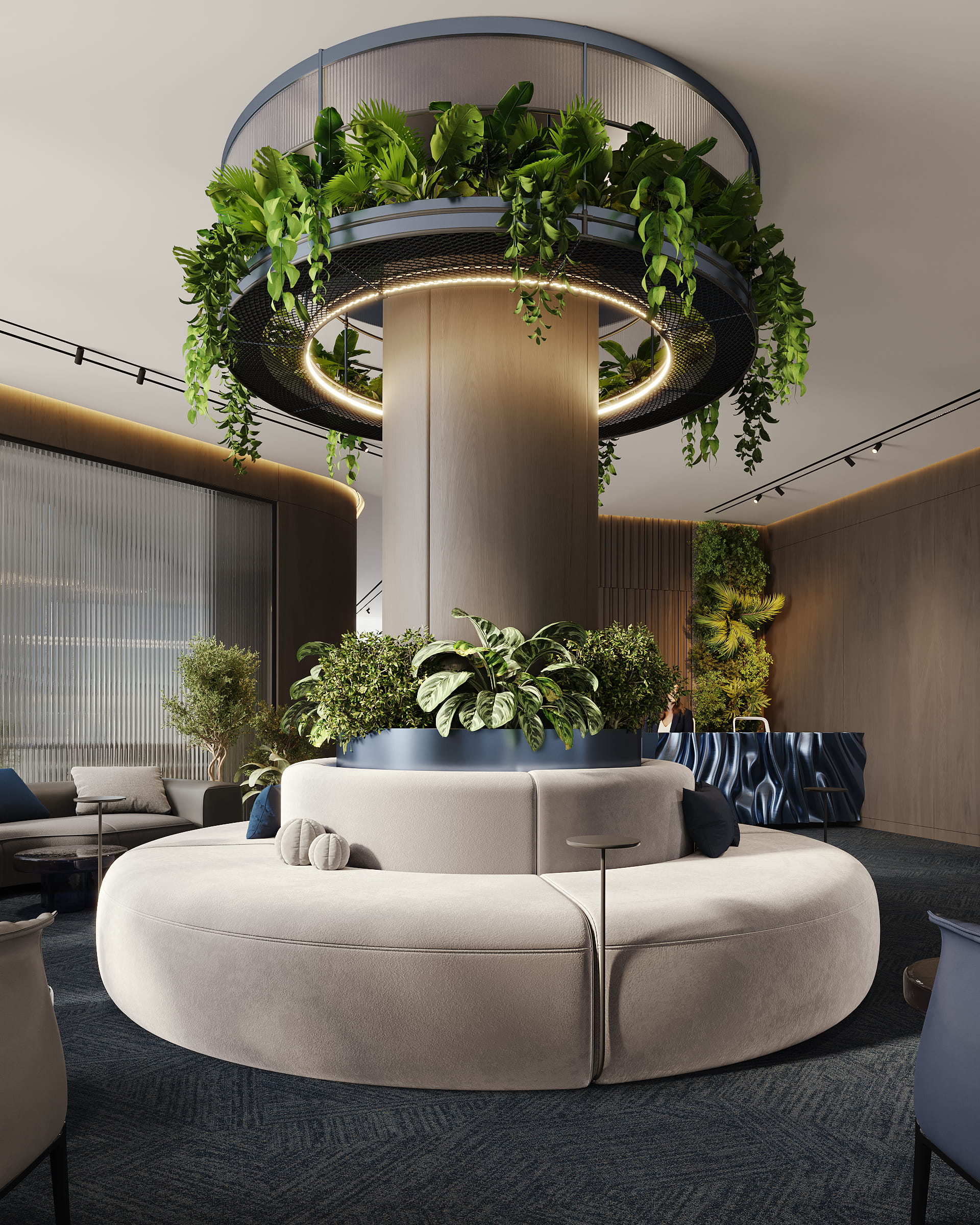
On an office floor, the maritime language stops being a metaphor. The wave from the lobby moves into the form of the reception desk — because this is where the building introduces itself to the tenant and their guests in working mode, not in decorative mode. The round waiting area with a planted island isn’t decorative either: circular geometry softens voices in an open volume and naturally pulls short conversations into a single spot, without needing walls.
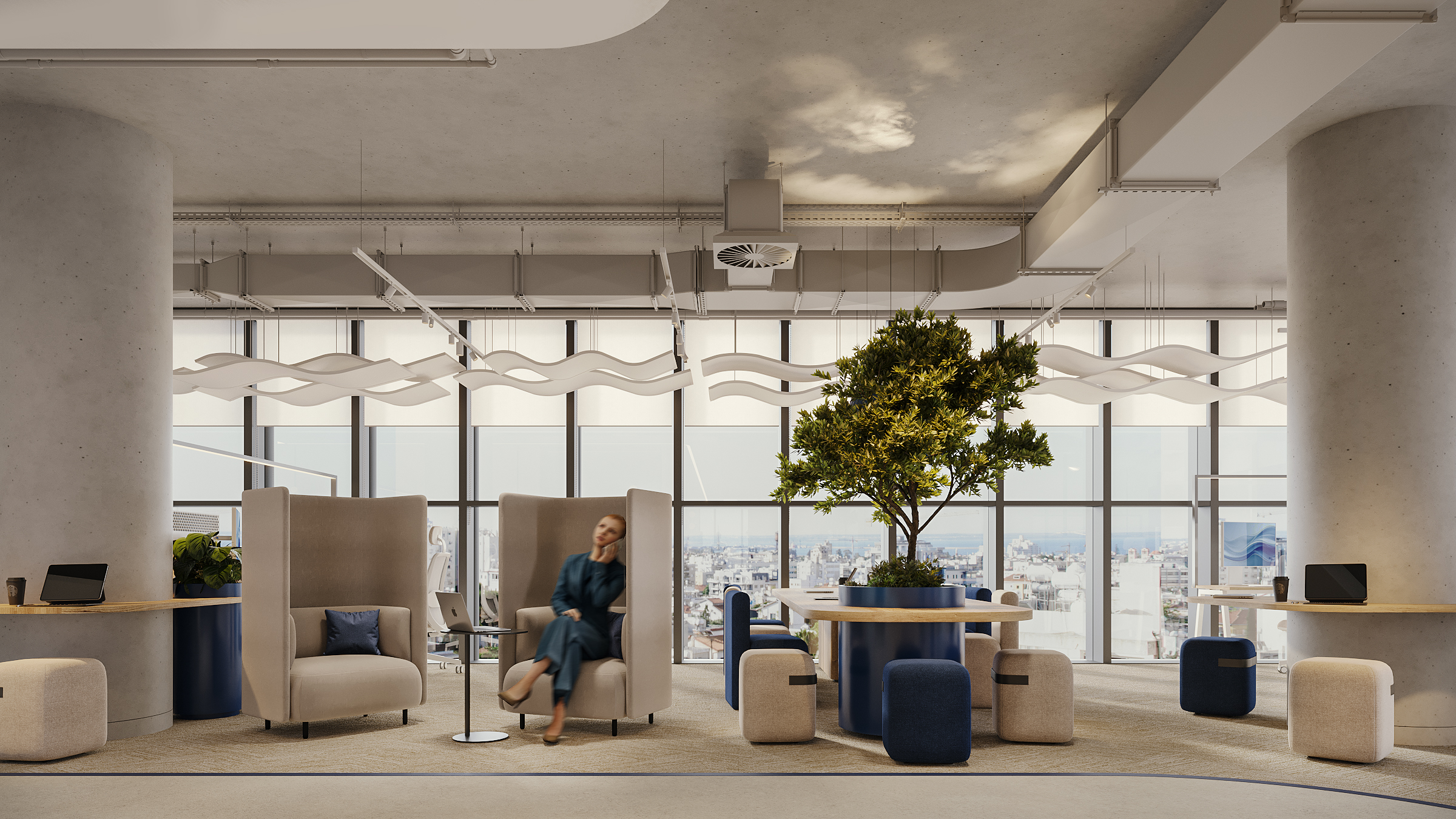
In the open space itself, the first decision wasn’t visual — it was acoustic. Wave-shaped ceiling panels absorb sound; without them, the open volume becomes unworkable by the end of the first week. That they also extend the maritime language from the lobby is a bonus, not the reason.
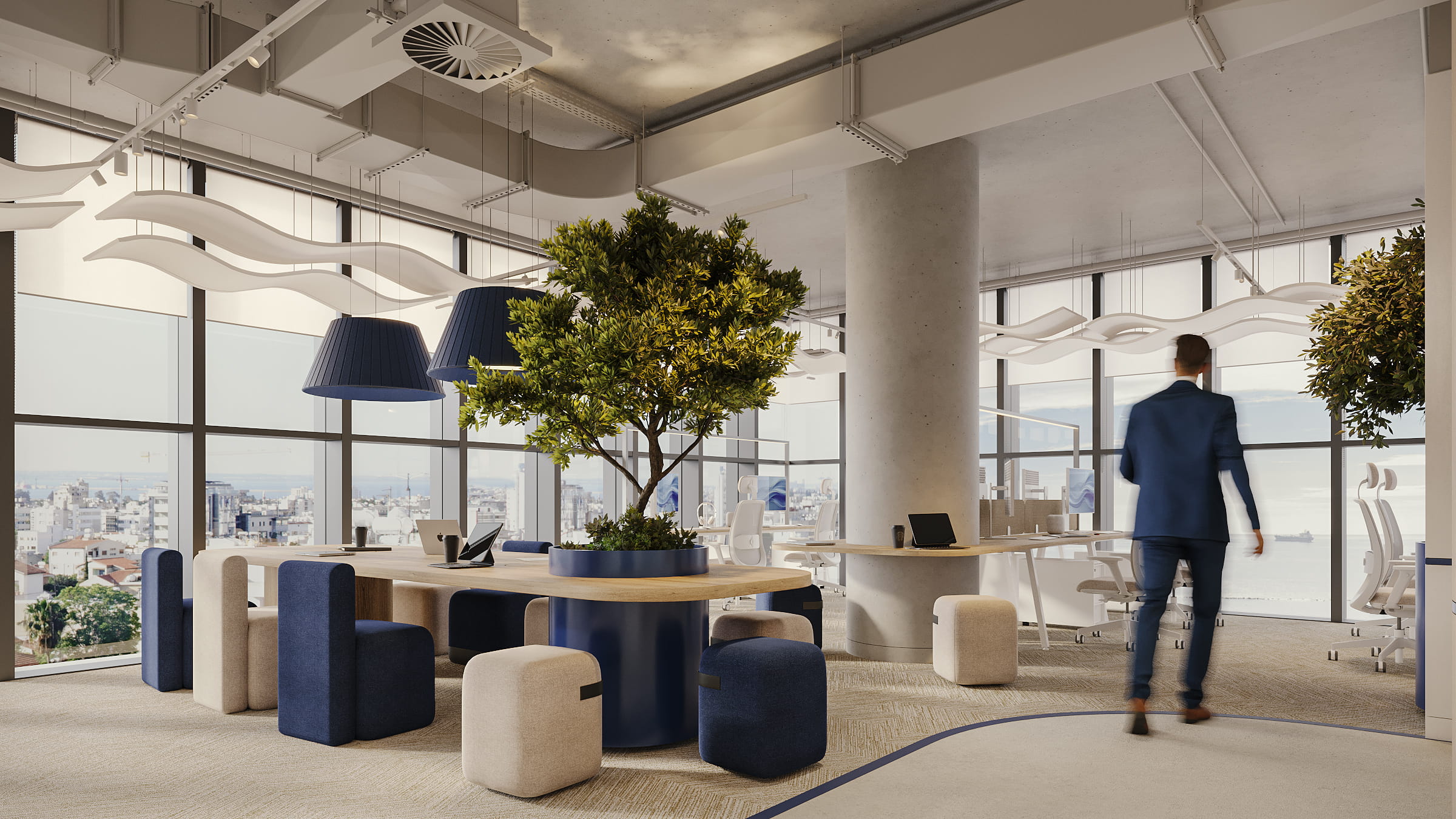
The central island, with a living tree at its heart, is a hybrid point for quick collaboration without booking a meeting room. Around it: individual desks, focus booths for heads-down work, and lounge wingbacks for calls. Four working modes in one volume, separated by colour, furniture, and lighting level instead of walls.
The Conference Floor — the Concept Quiets Down
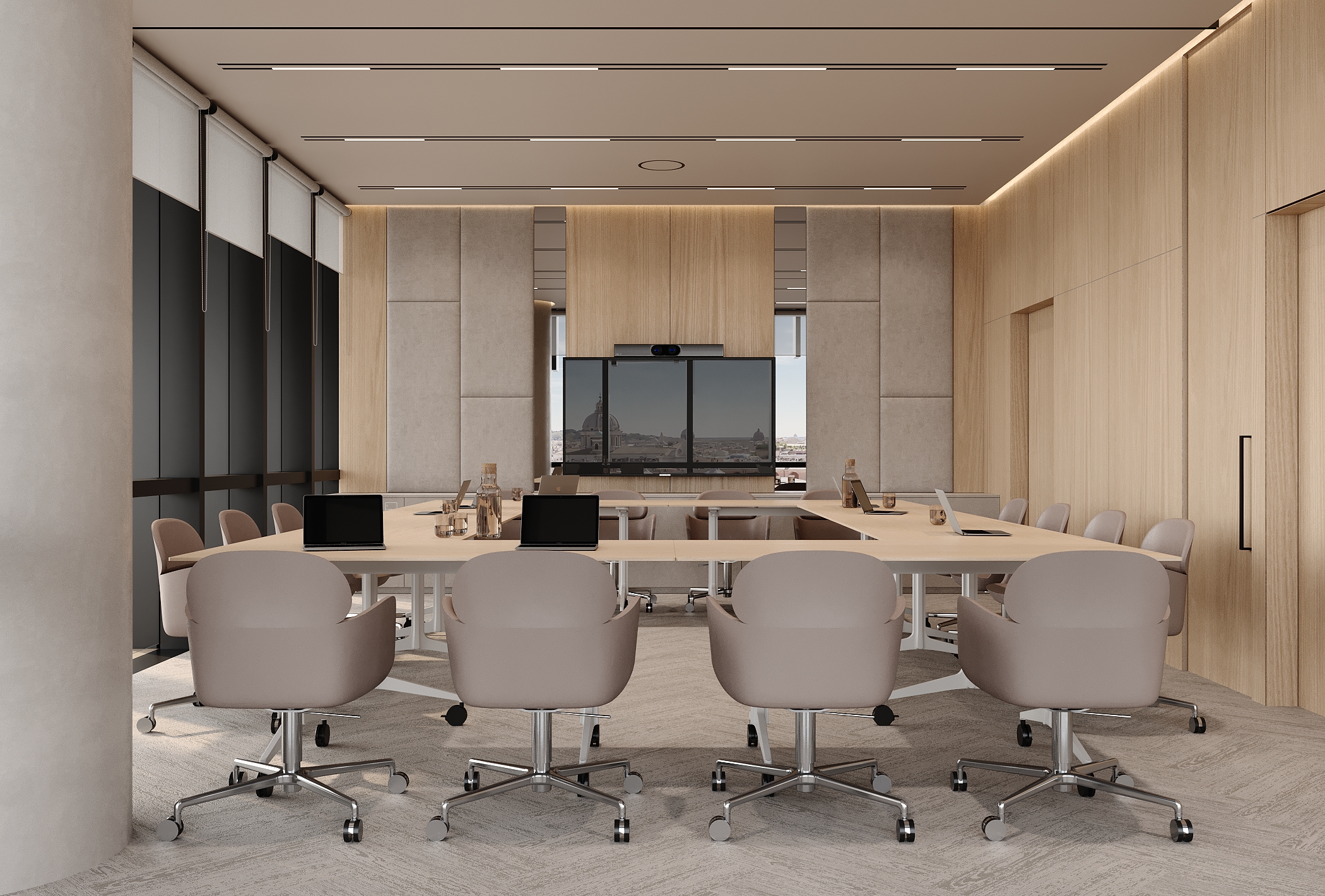
The conference floor sits above the office levels and works on a different logic: this is where the building meets outsiders — clients, partners, guests. Their attention should be on the meeting, not on the interior, so the maritime language steps back here: sand and oak instead of the wave overhead, art on the walls instead of blue lighting.
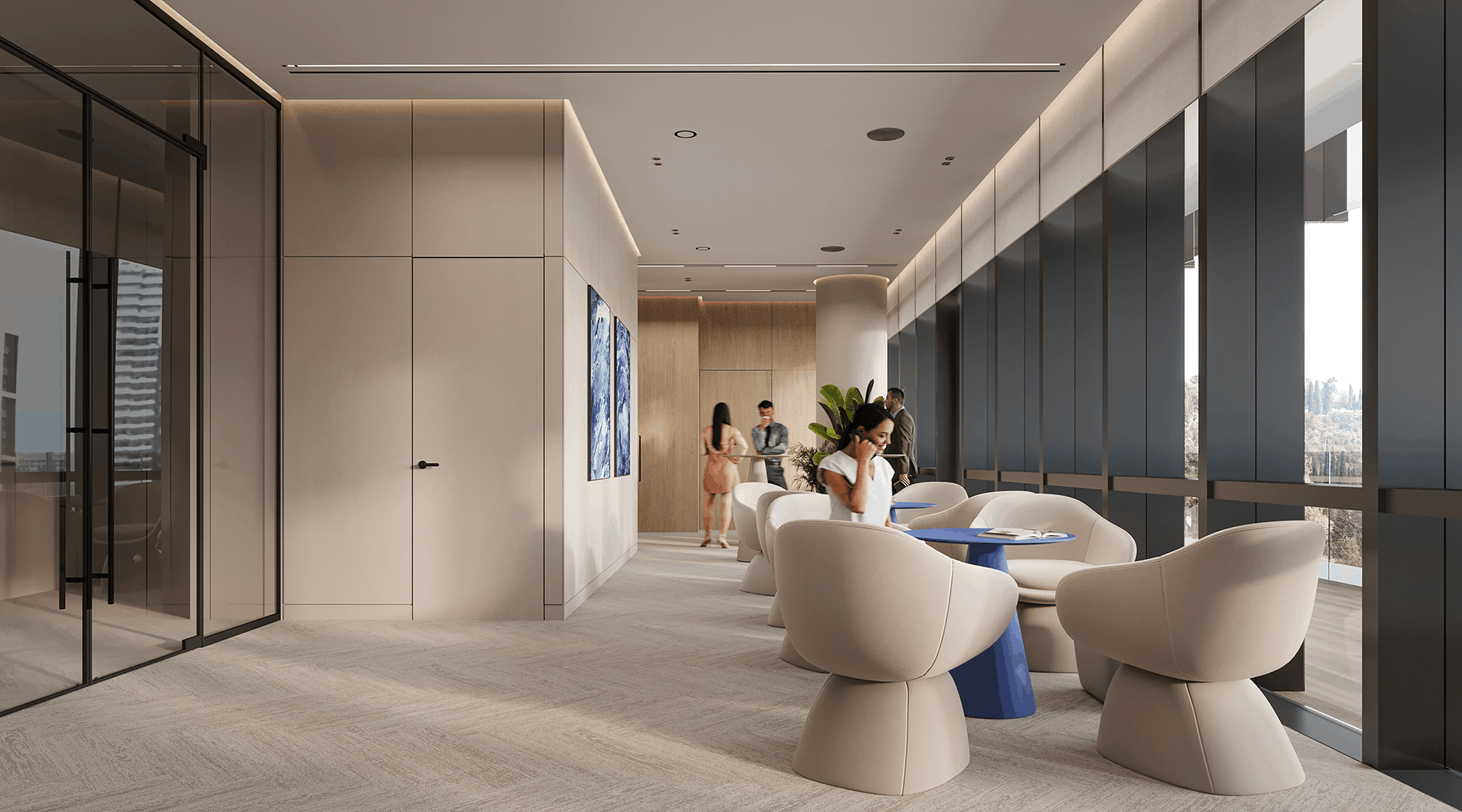
The main hall has a modular partition. Closed: a boardroom for eight. Open: a theatre for sixty. Most business centres build two separate rooms for these scenarios; we made one that changes shape. The second hall is a permanent U-shape for longer working sessions. For the tenant, that translates into additional usable area and flexibility across event formats.
The Gym — a Change of Register
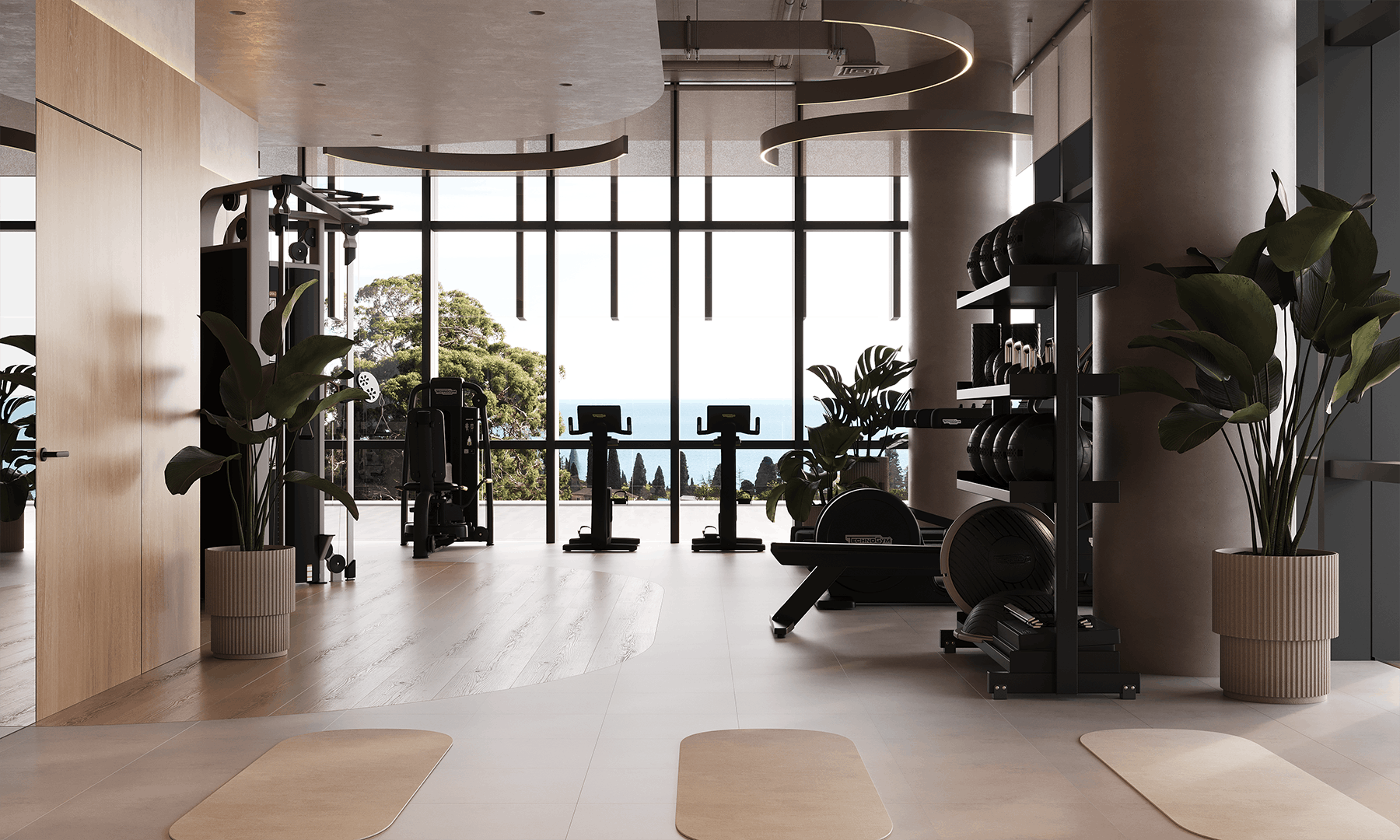
In the wellness zone, the language of the concept deliberately changes subject. The ceiling here isn’t a wave — it’s a system of arcs and rings that rhymes with the trajectories a body makes under load: circles of light above where circles of movement happen below. The palette shifts to graphite and warm oak; blue steps aside, black steps in. Storage isn’t hidden on a rack but shown — a wall of oak pegboards holding kettlebells, rollers, and balls the way a craftsman holds tools. The locker rooms continue the same finish: timber, terrazzo, black hardware.
The Rooftop — Concept Becomes Mood
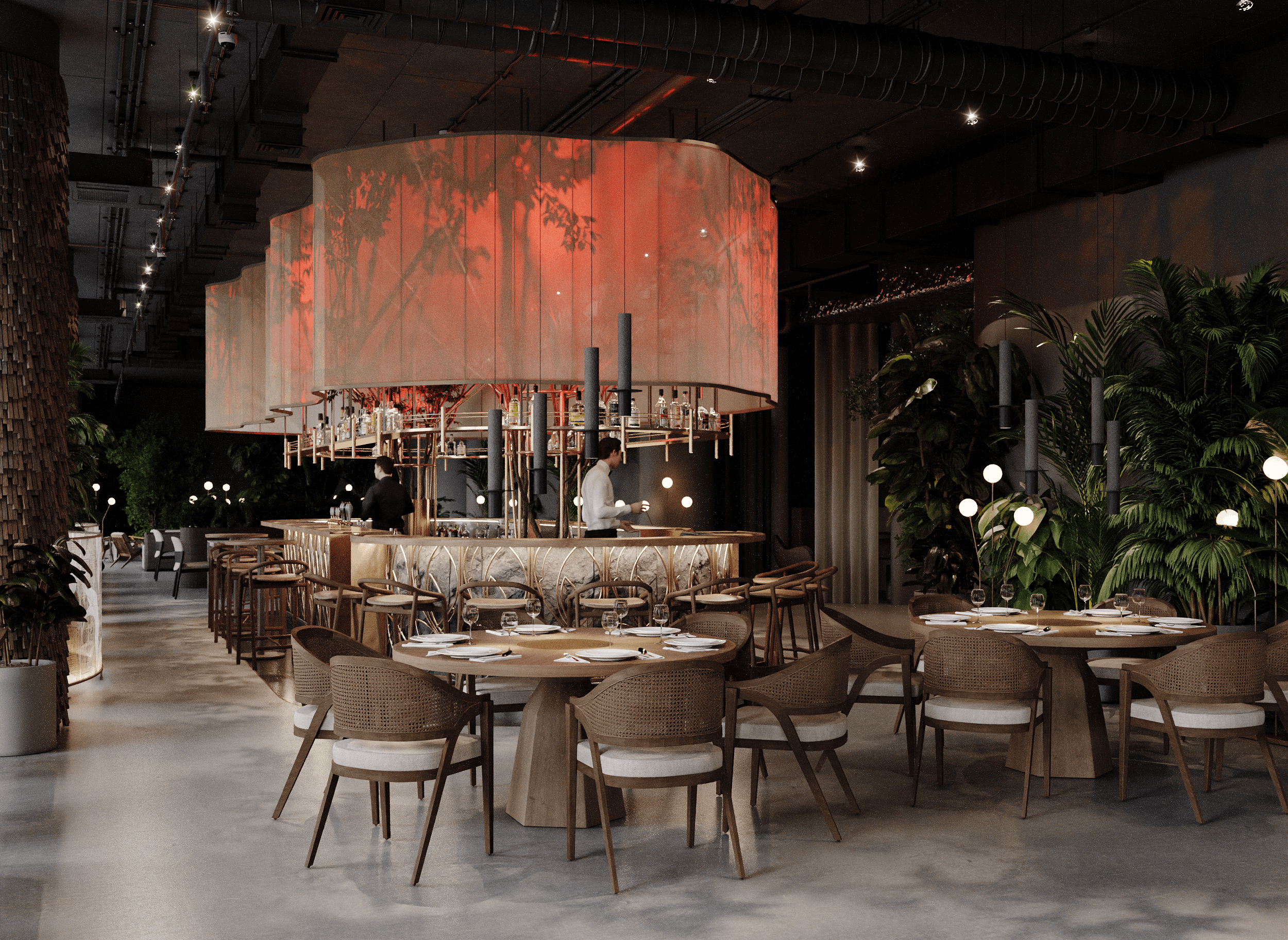
On the rooftop, the maritime theme returns, but in a different register: not sculptural, as in the lobby, but ambient. A curved bar glows blue against warm stone; an oval light installation overhead traces currents through the air; candles sit where the blue lighting used to be.
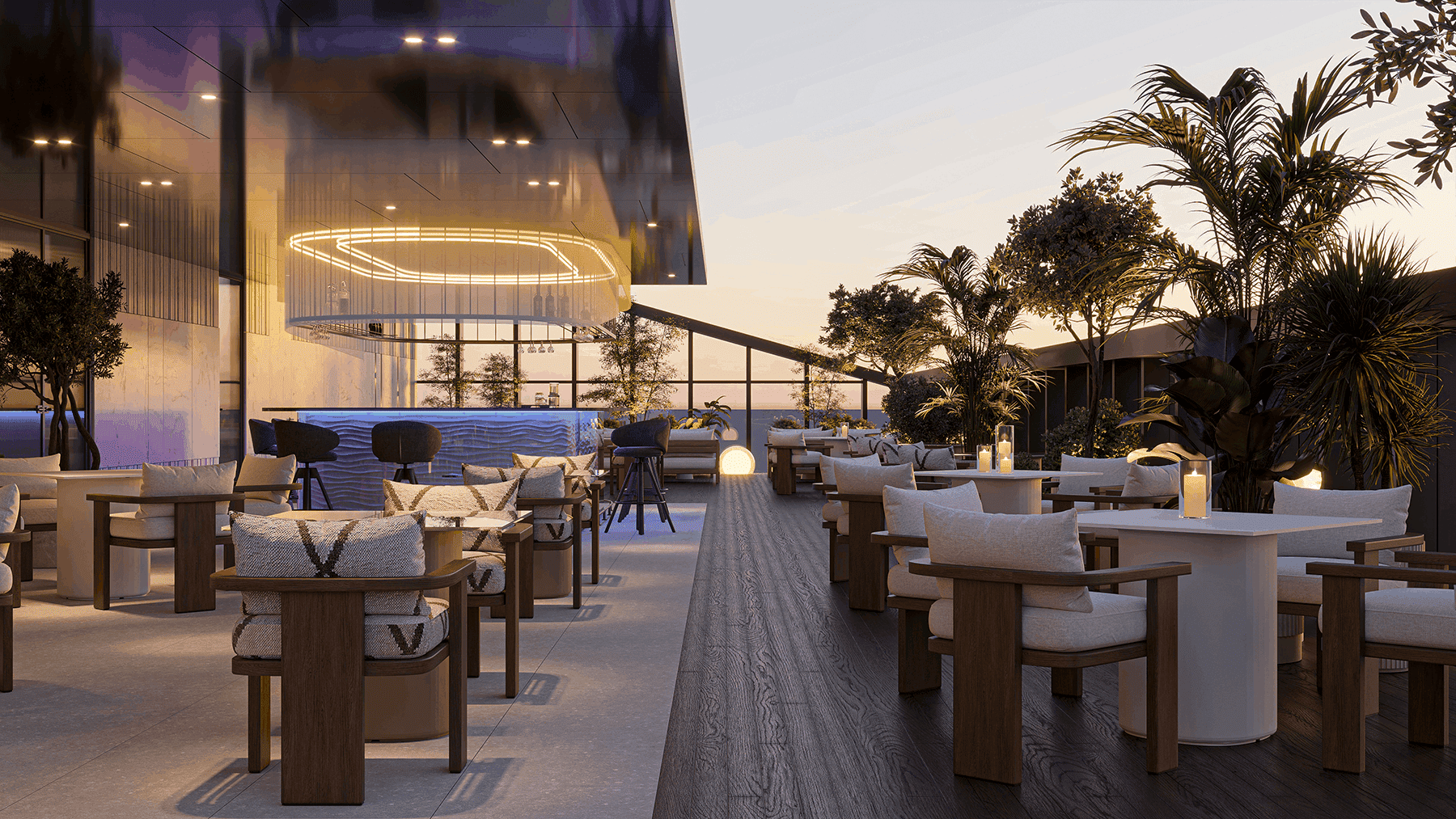
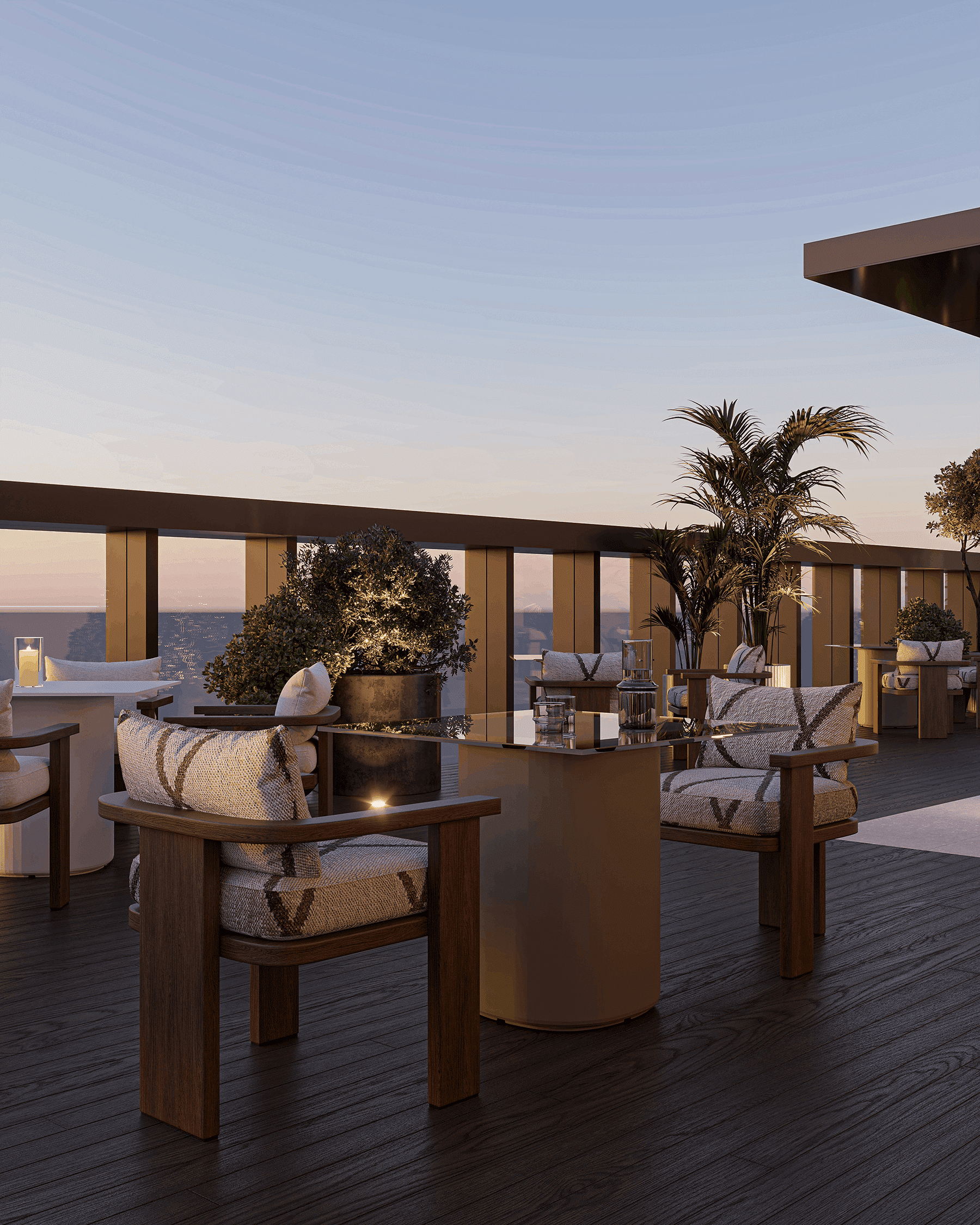
The space operates in two modes. By day, it's an overflow for the office — informal meetings, calls, coffee away from the desk. By evening, a destination — client dinners, end-of-quarter drinks, the kind of conversation a boardroom makes a poor backdrop for.
Beyond the Render: Engineering, Documentation, Coordination
A beautiful concept is the smaller part of the work on a commercial building. The rest is what makes the concept ready for actual construction, acoustics, ventilation, and life in use by the tenant.
The key spatial decisions on this project were made from the functional side; the maritime plasticity was fit to them, not the other way around. The wave-shaped ceiling panels in the open space are first of all an acoustic solution; their decorative value is secondary. The round geometry of the waiting area works as a natural sound baffle, without partitions. The modular partition in the conference hall turns one room into two scenarios instead of two separate rooms — more usable area, more leasing flexibility. Four working modes share a single open volume, separated by colour, furniture, and lighting level rather than walls. The biophilic islands do three jobs at once: zoning, acoustics, and a wellness component.
Next
Roof Bar
1146 sq.m.
 Back Back

Calculate the cost
Thank you!
Your quote request has already been sent. We will contact you shortly.


En
Ua