Best of Year 2025 Honoree — Interior Design
2025
Office of a product company
Customer
Confidential product company
Area
920 sq.m.
Location
Kyiv, Ukraine
Status
Implemented


Office with Character: A Space Built for Action
This office was created for a team that thinks fast, works flexibly, and develops products at the intersection of emotion and technology. There’s no excessive decor or stylization here—just a space that keeps up with the team’s pace and helps them stay focused in constant motion.
The spatial concept is built around the idea of sport as a metaphor for team dynamics: competition, switching modes, moving forward. But this theme isn’t literal—it’s expressed through how the space is used, the materials, and elements that invite people to be active participants, not passive observers.
Client’s Request
The team wasn’t looking for just an office, but an environment that would match the rhythm of how they work. A space open to change, energizing, technically efficient—and far from traditional office clichés.
They asked for more movement, fewer templates. No generic meeting rooms with flipcharts. No classic reception desks. Everything had to support how people really use the space day to day—naturally, and with energy.
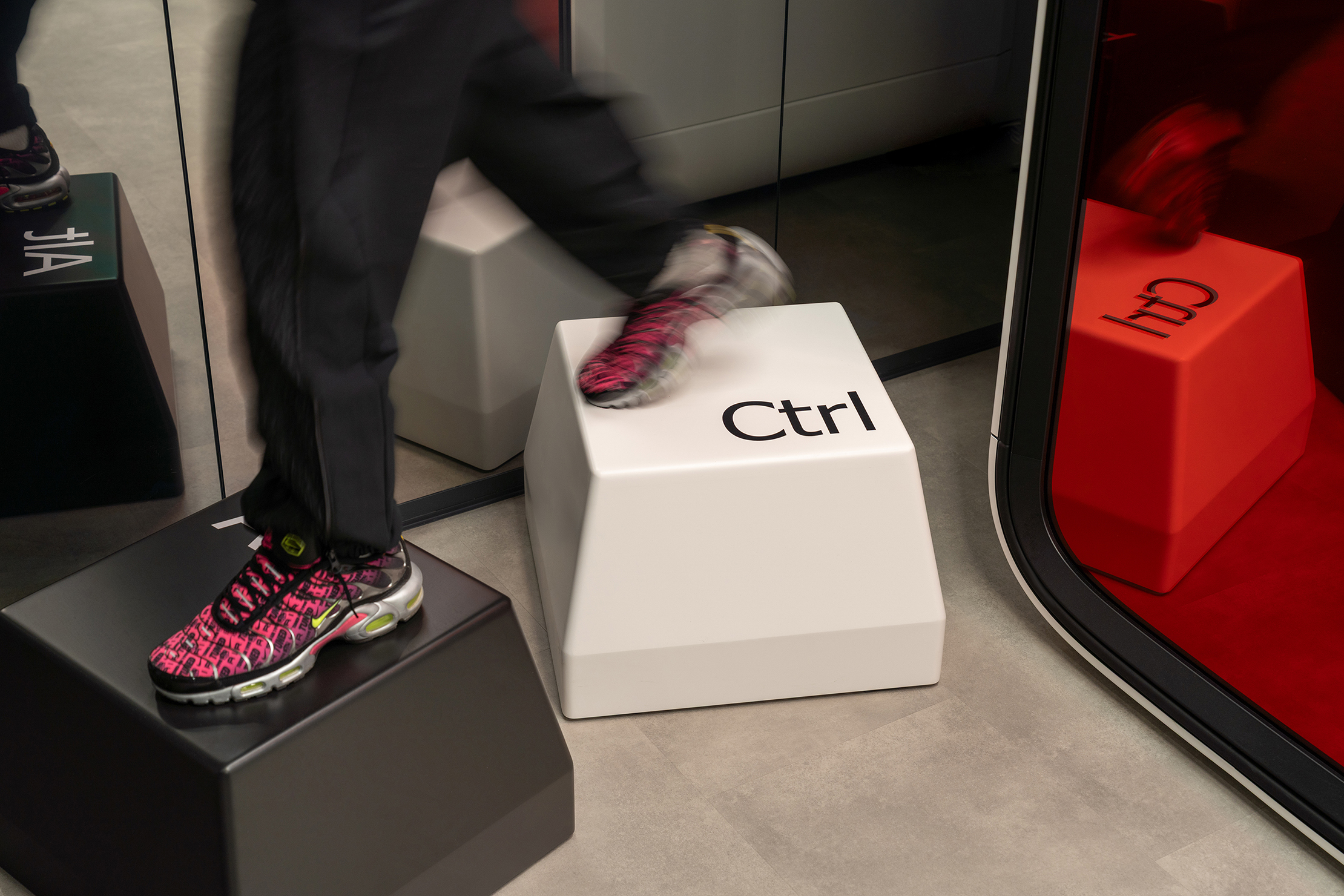
We proposed a concept of the office as a sports field for ideas. Each zone was designed to trigger a certain state: focus, excitement, switching gears, collaboration. Not through literal references, but through layout, textures, and strong character elements. Sport is present in every part of the office—subtle, visually integrated, never theme-like. It’s not a “concept office,” but a space that reflects how the team operates.
Entrance Area
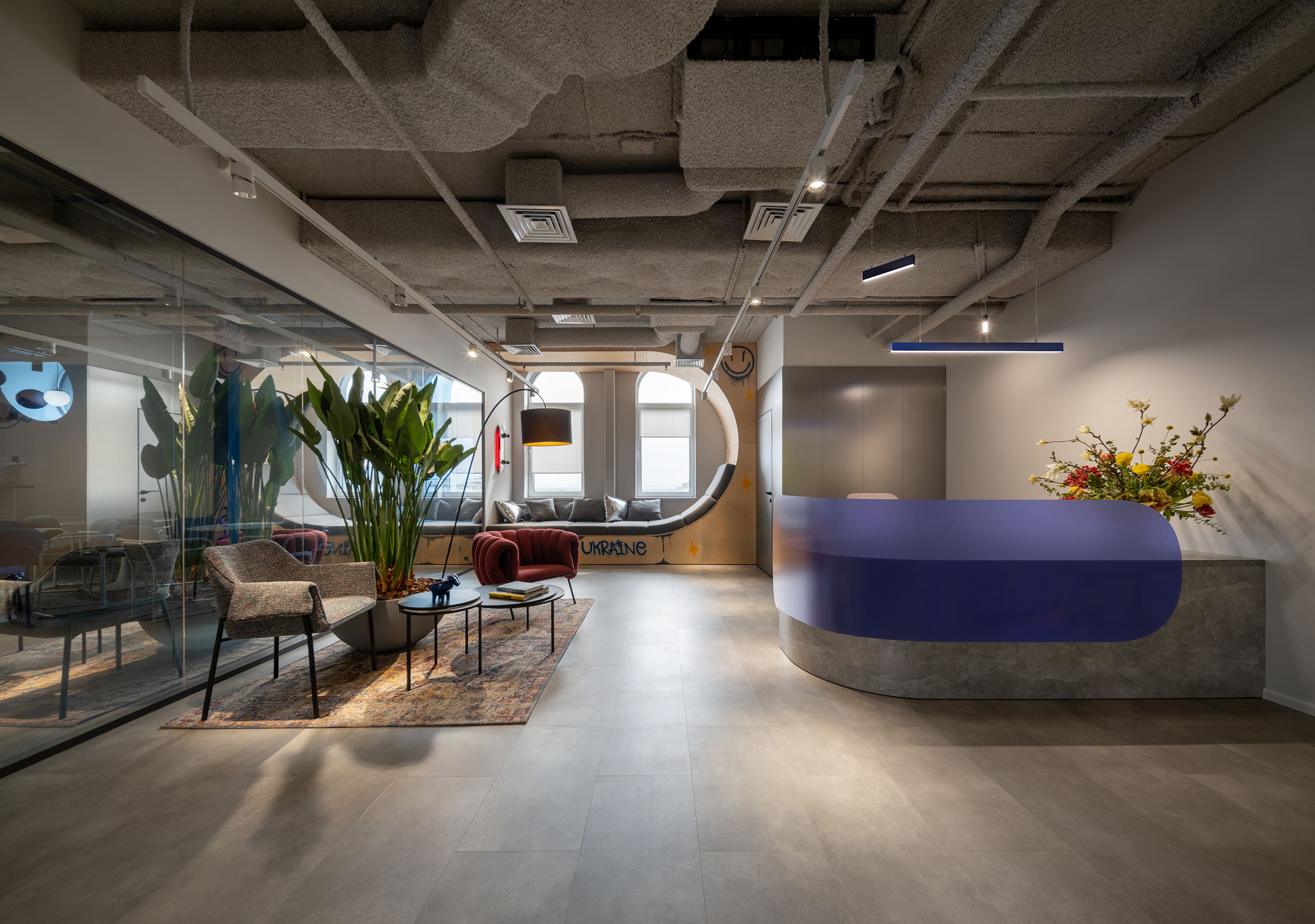
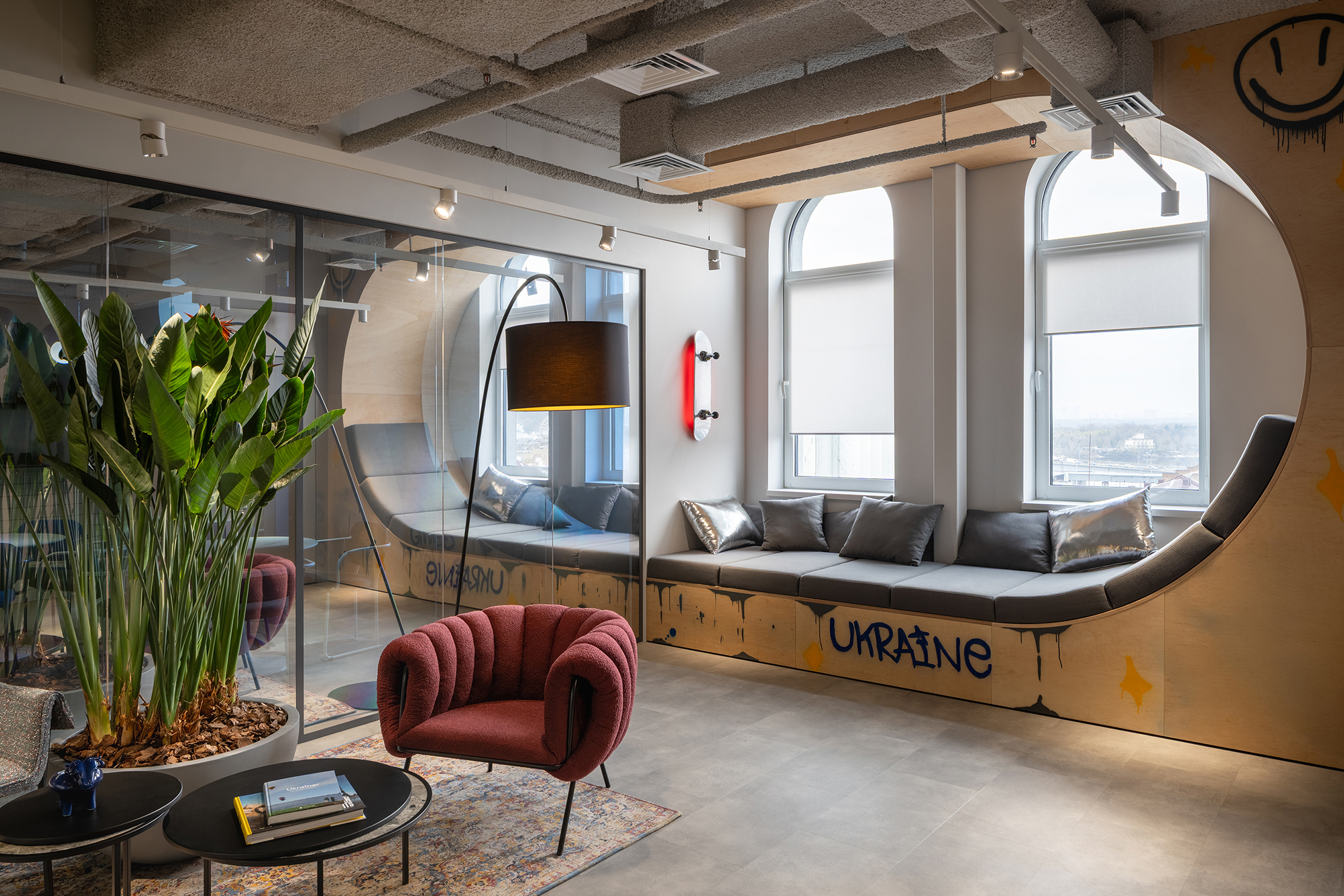
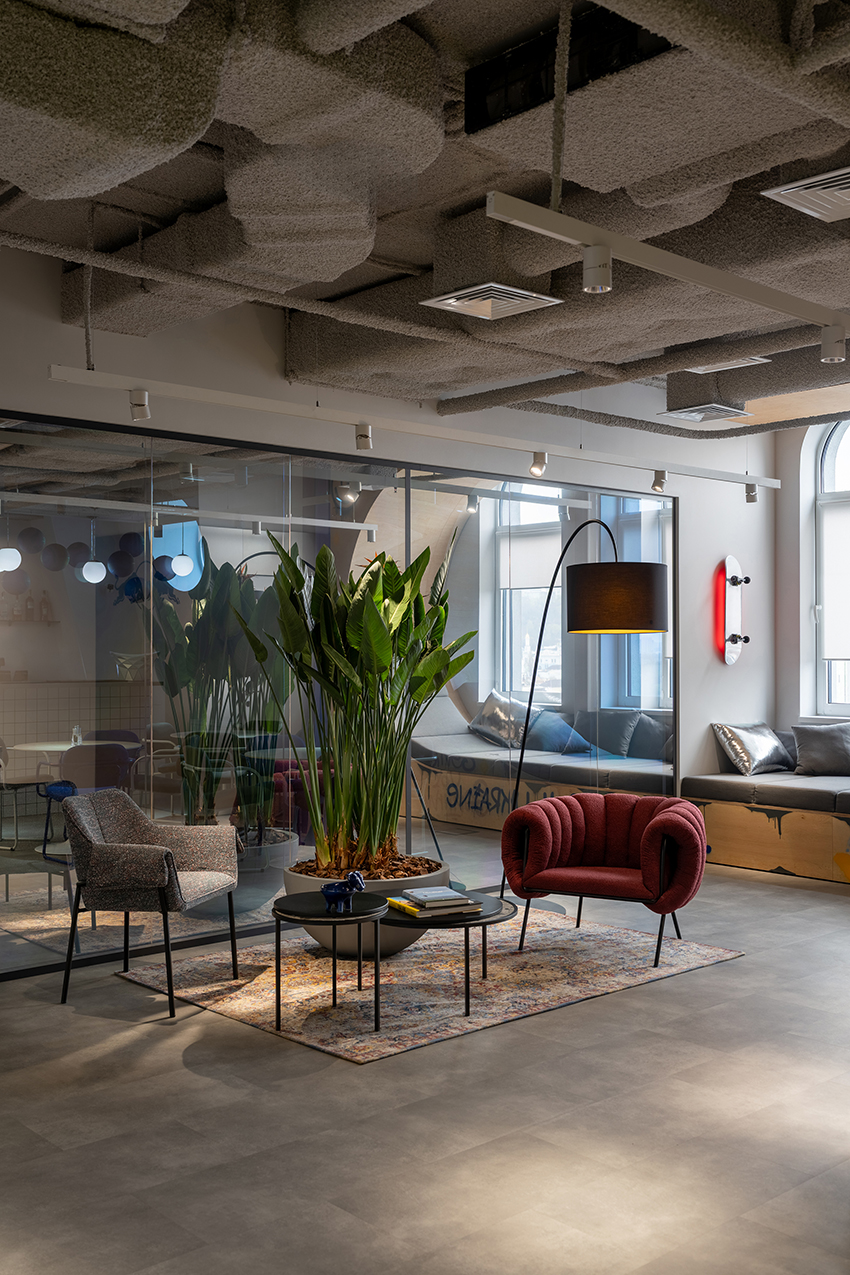
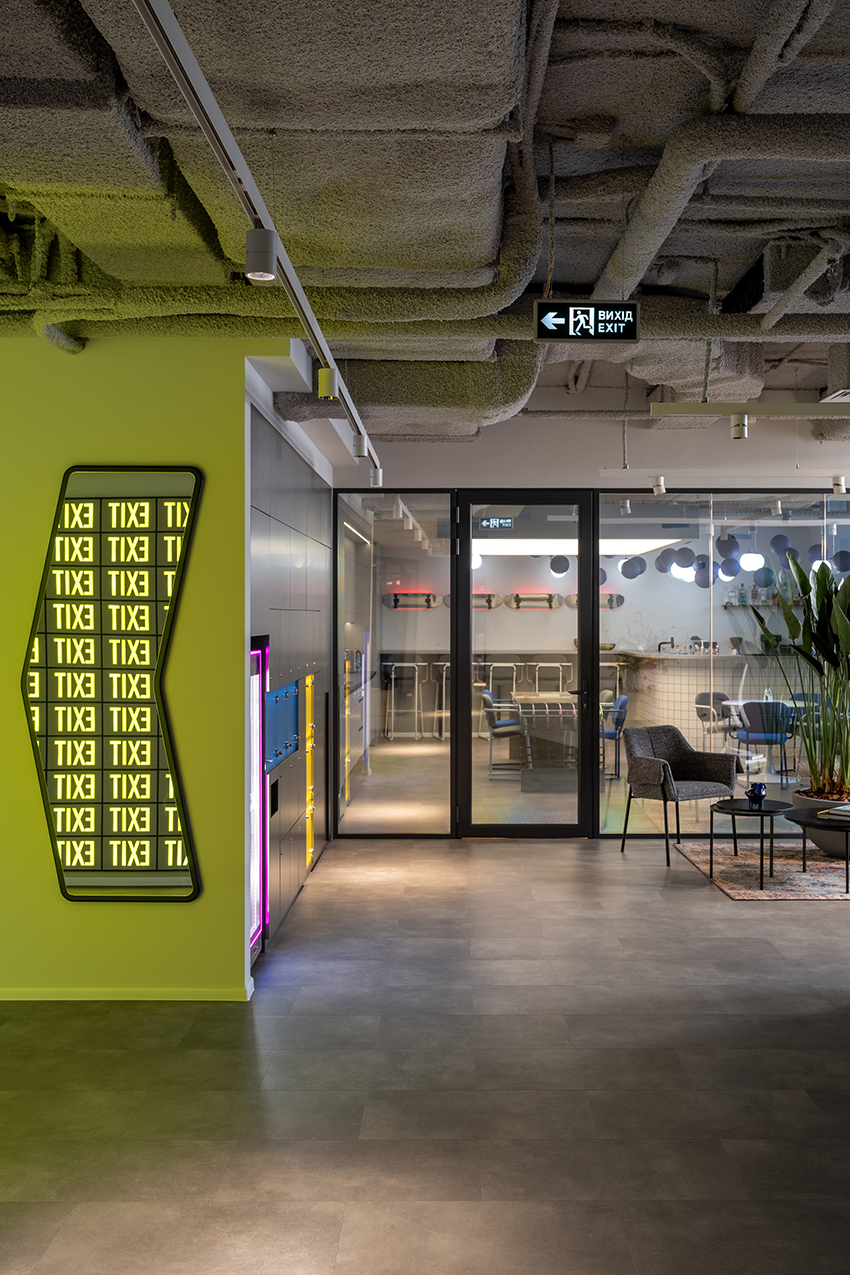
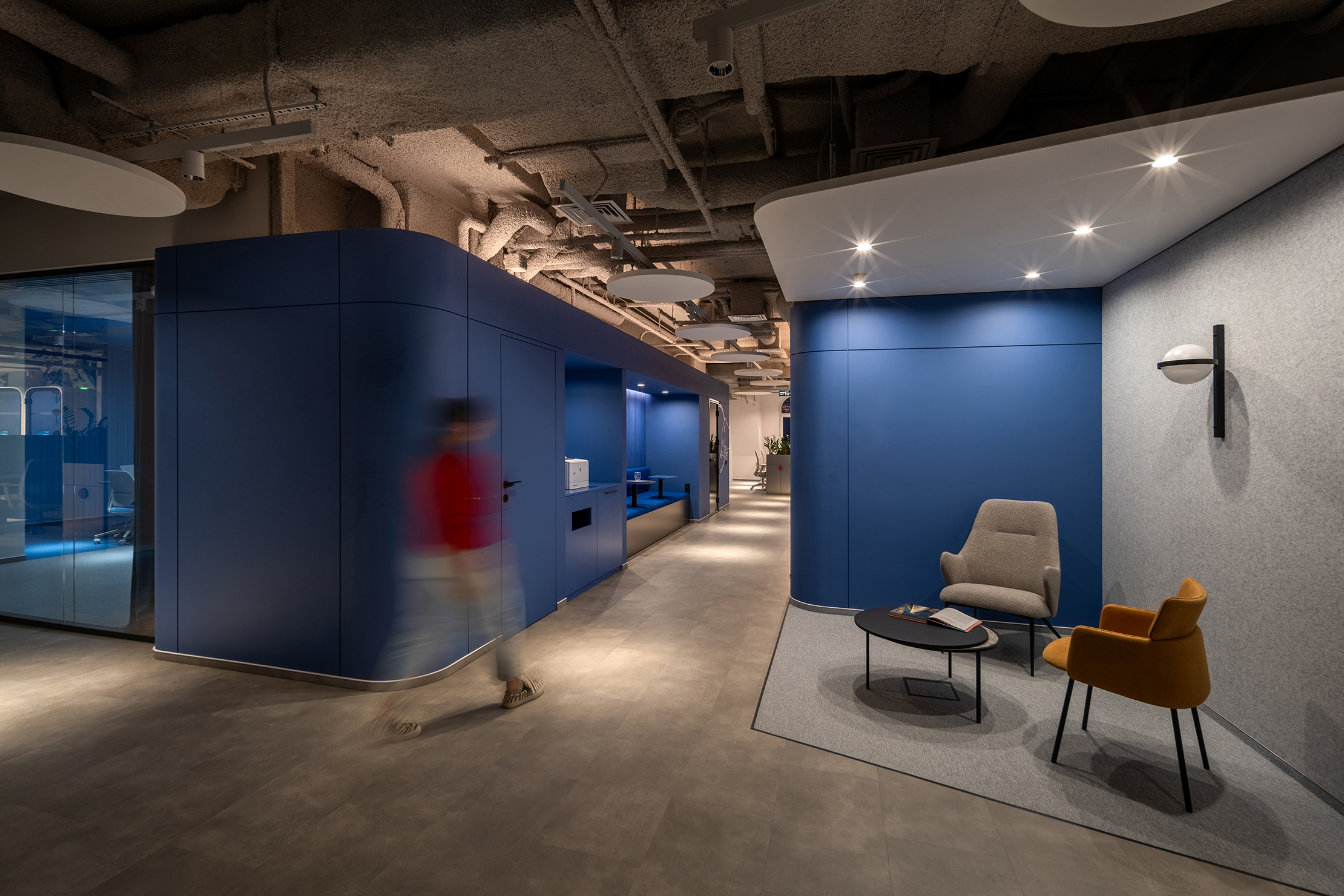
The first thing you see is a curved volume in deep blue—replacing the traditional reception desk. Lowering that front-facing barrier communicates openness. The floor features a Persian-style rug laid over rough textures. A soft seating area by the window is shaped like a ramp—a subtle nod to skate culture. Graffiti on the walls adds rhythm and movement. This is the first point where the idea of sport appears not as decor, but as spatial language.
Kitchen
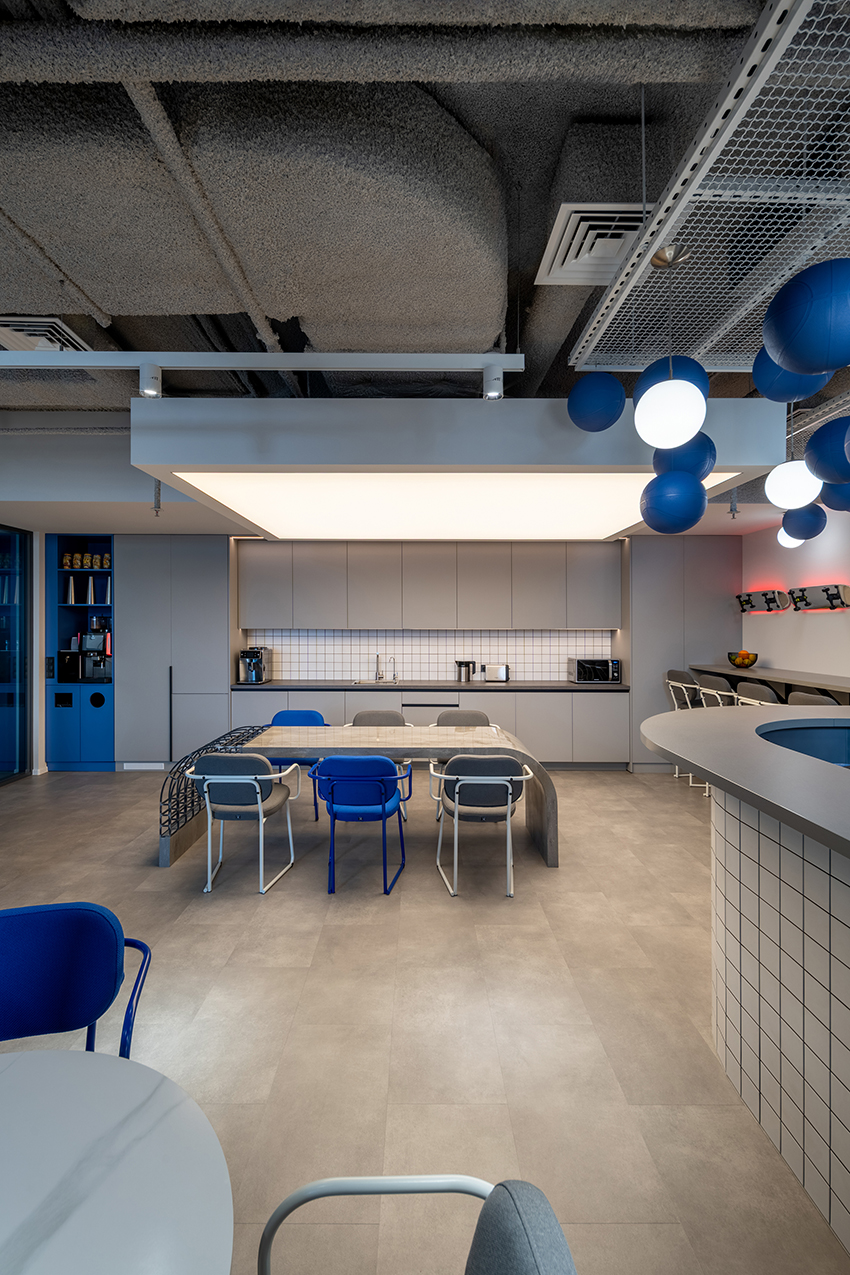
This isn’t a tucked-away corner—it’s a central hub for team interaction. At the center is a custom-made table: solid concrete combined with a perforated metal grid. Heavy, sculptural, steady.
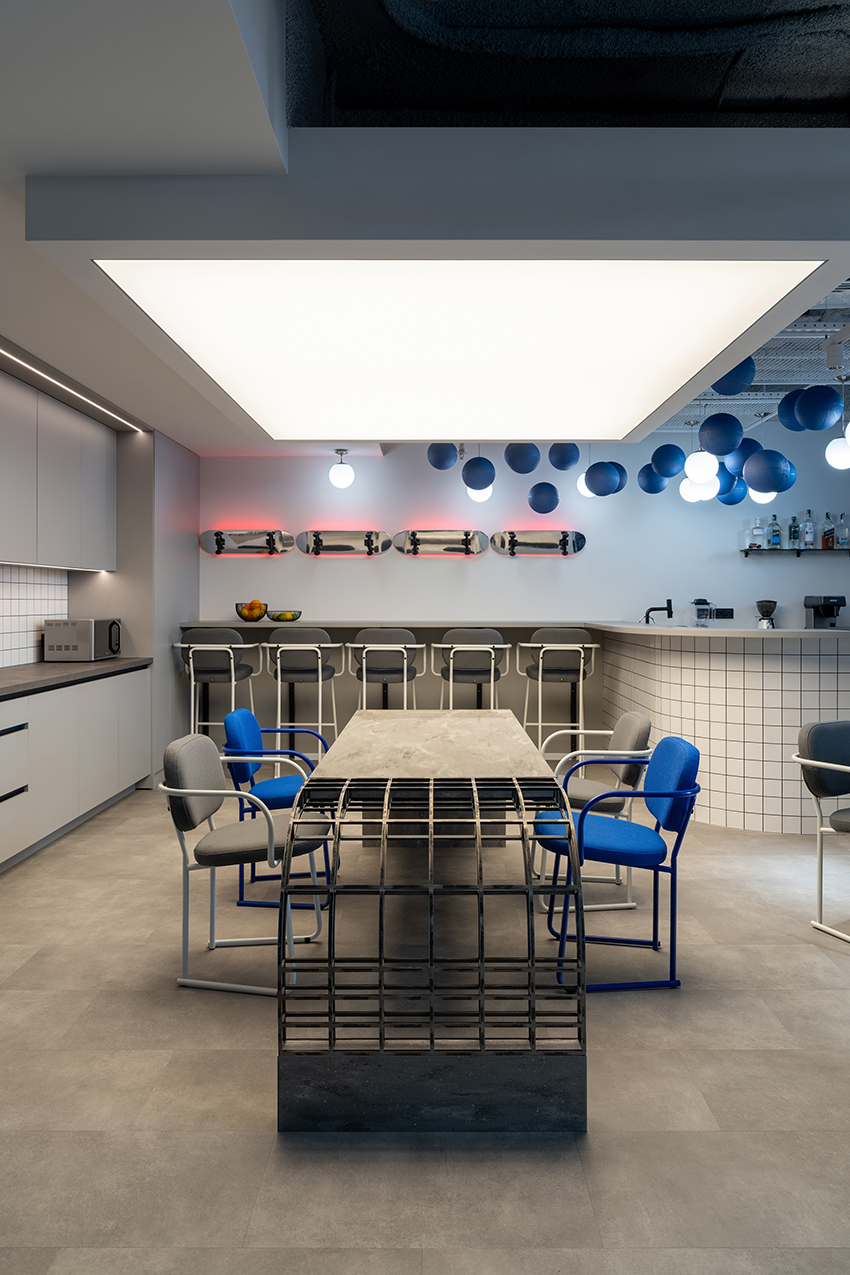
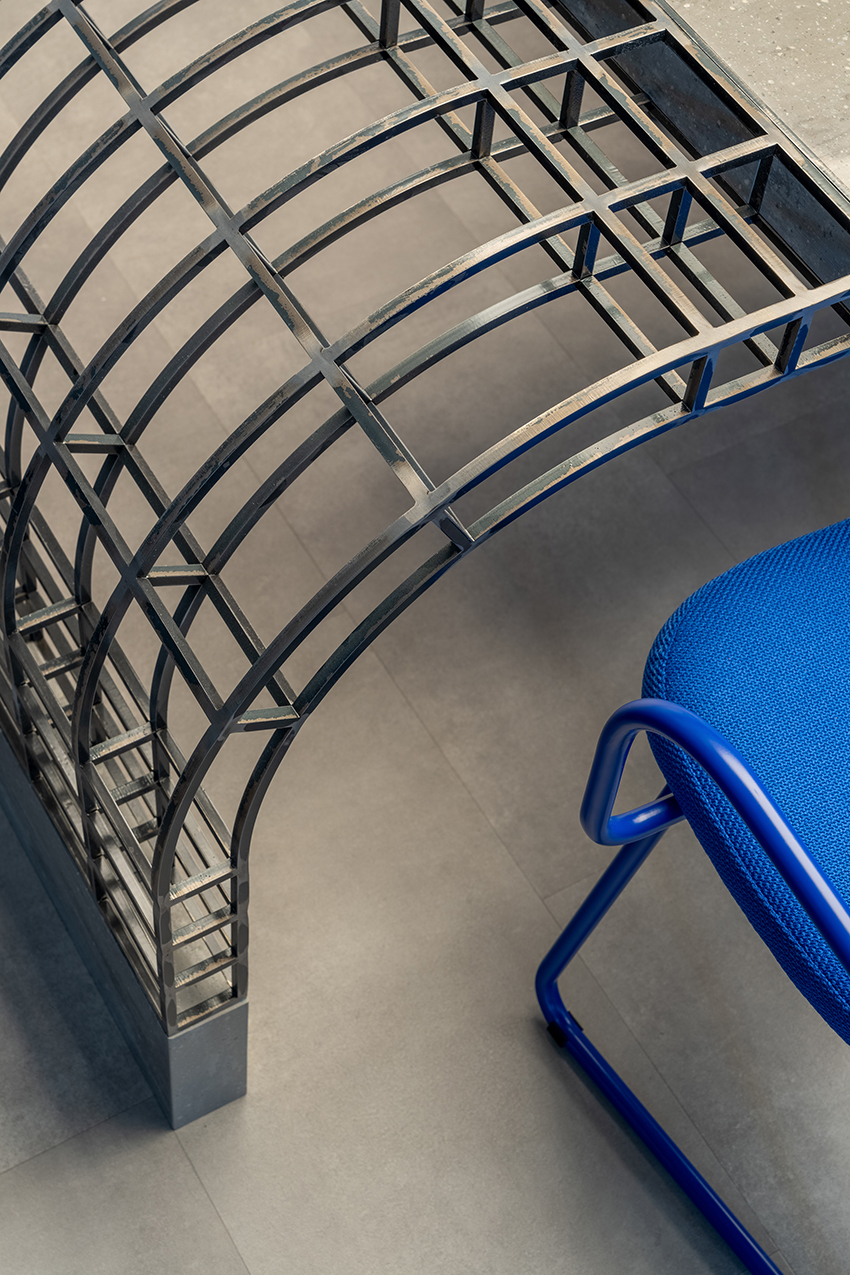
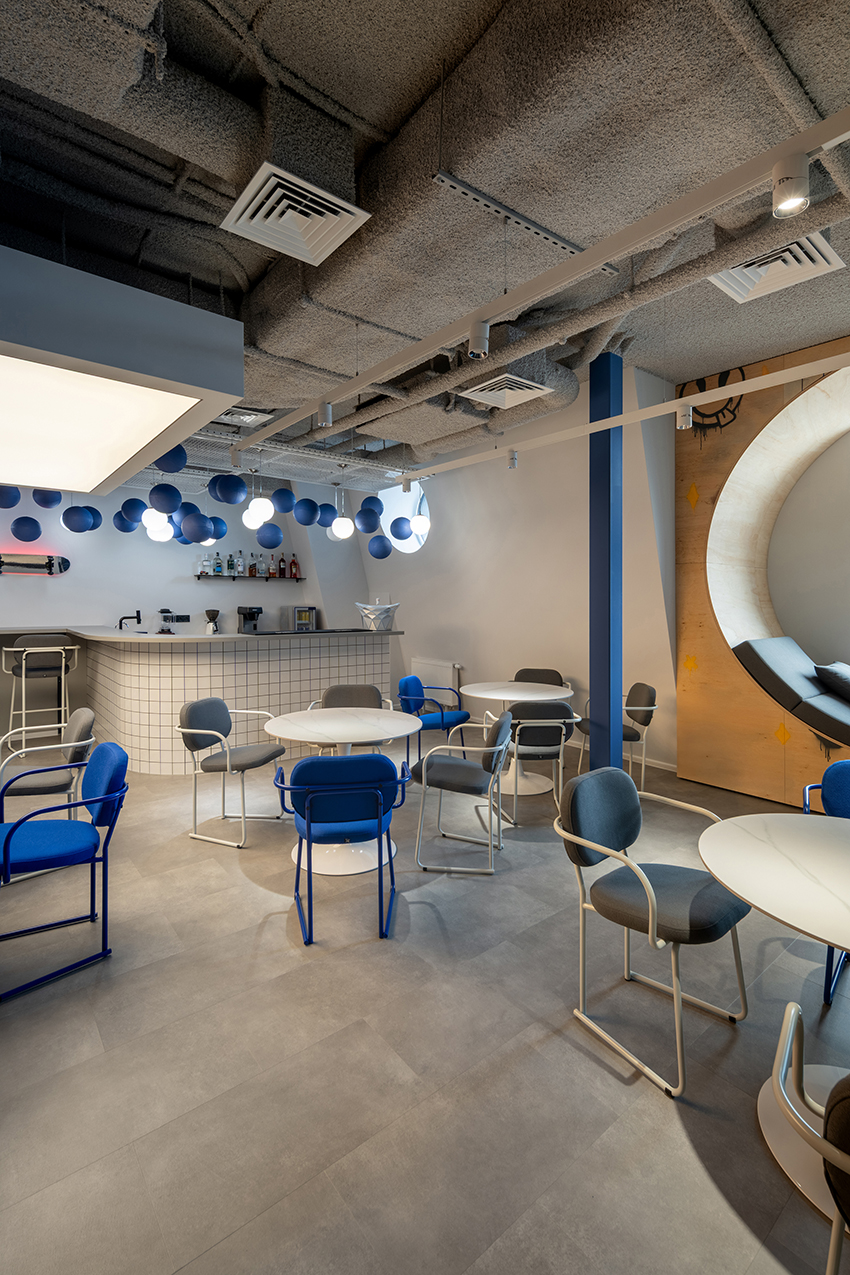
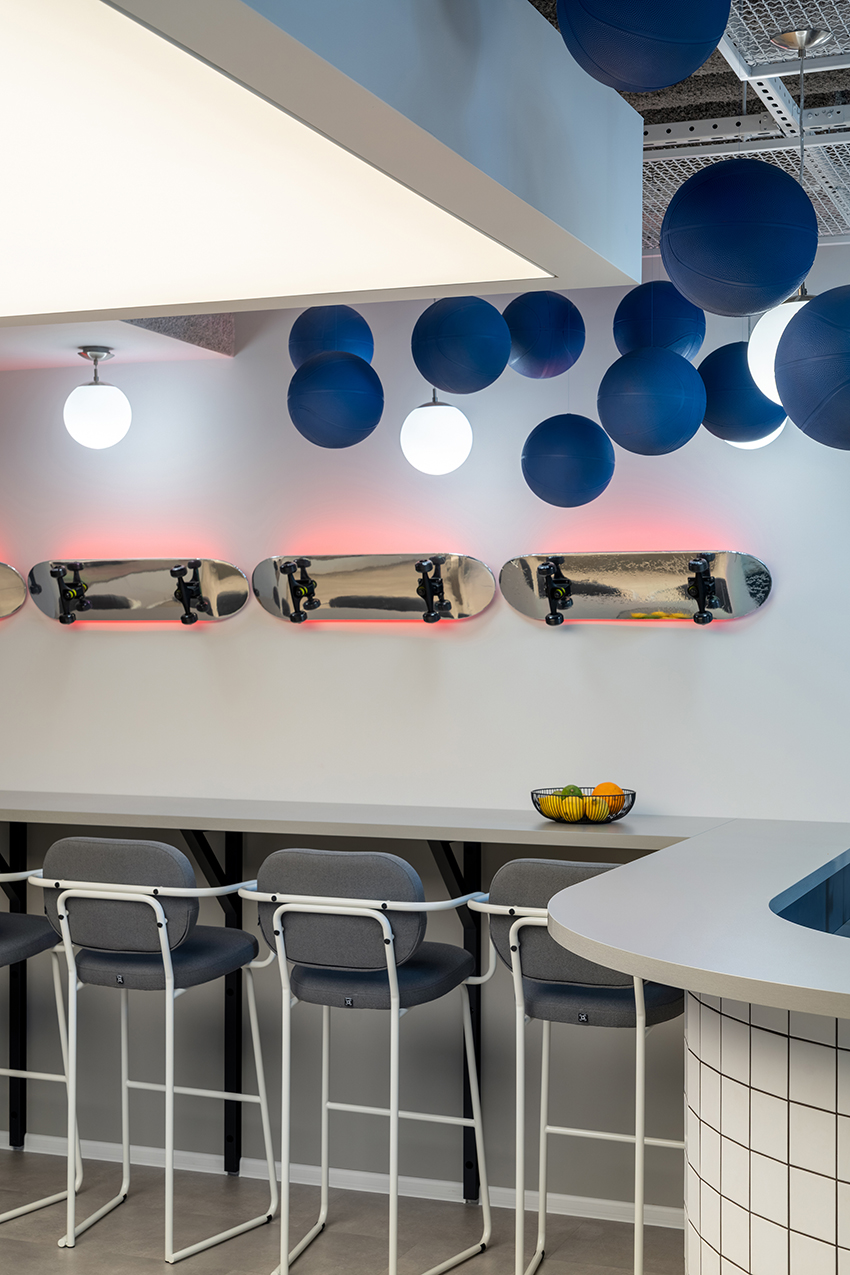
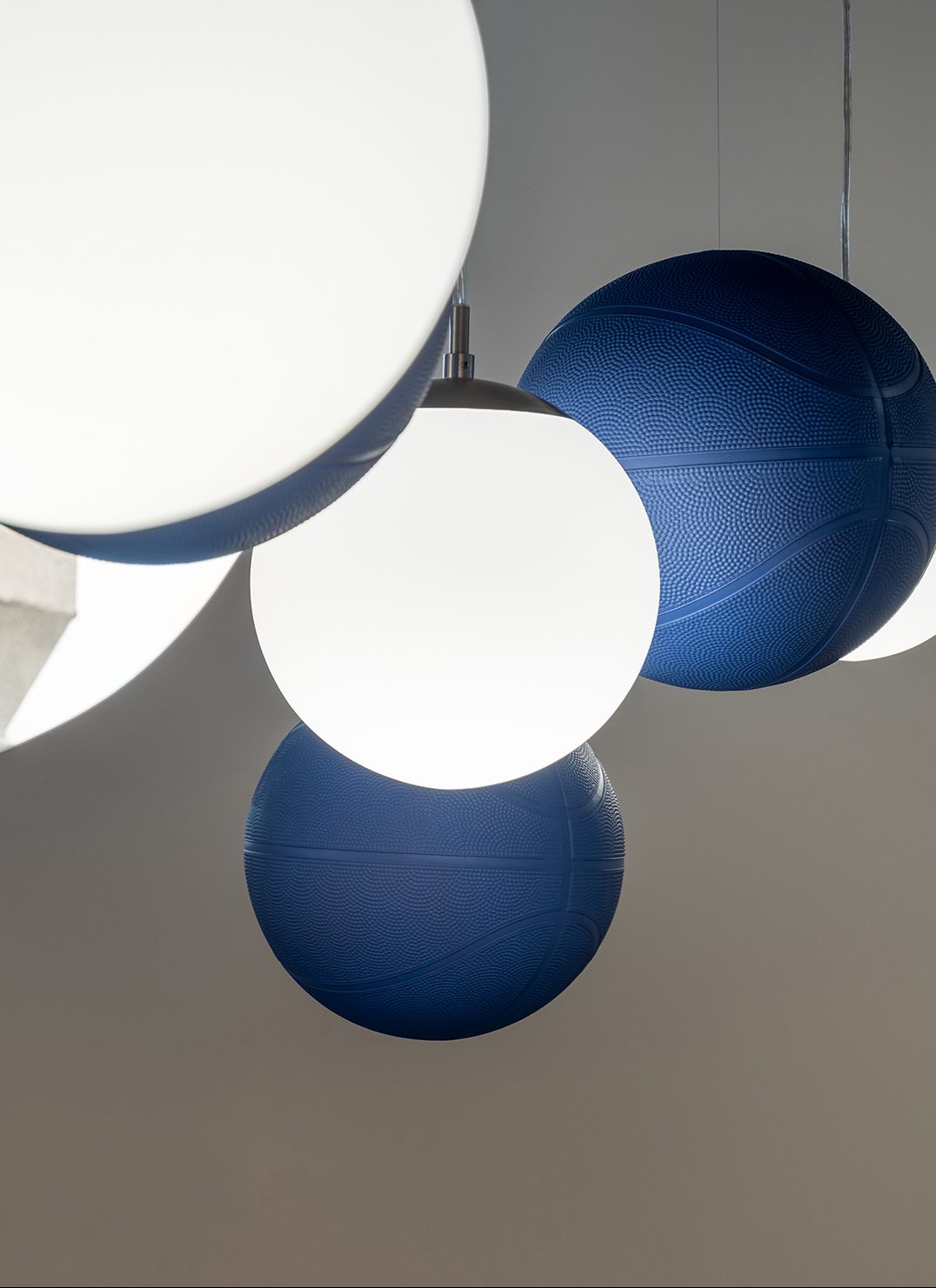
Next to it—an elevated bar counter. Hanging above is a lighting installation of glowing spheres and real basketballs—a quiet but clear reference to the office’s athletic DNA.
This space is always in use: for coffee, quick syncs, spontaneous exchanges. It’s not a break area—it’s an operational platform.
Open Space & Informal Zones
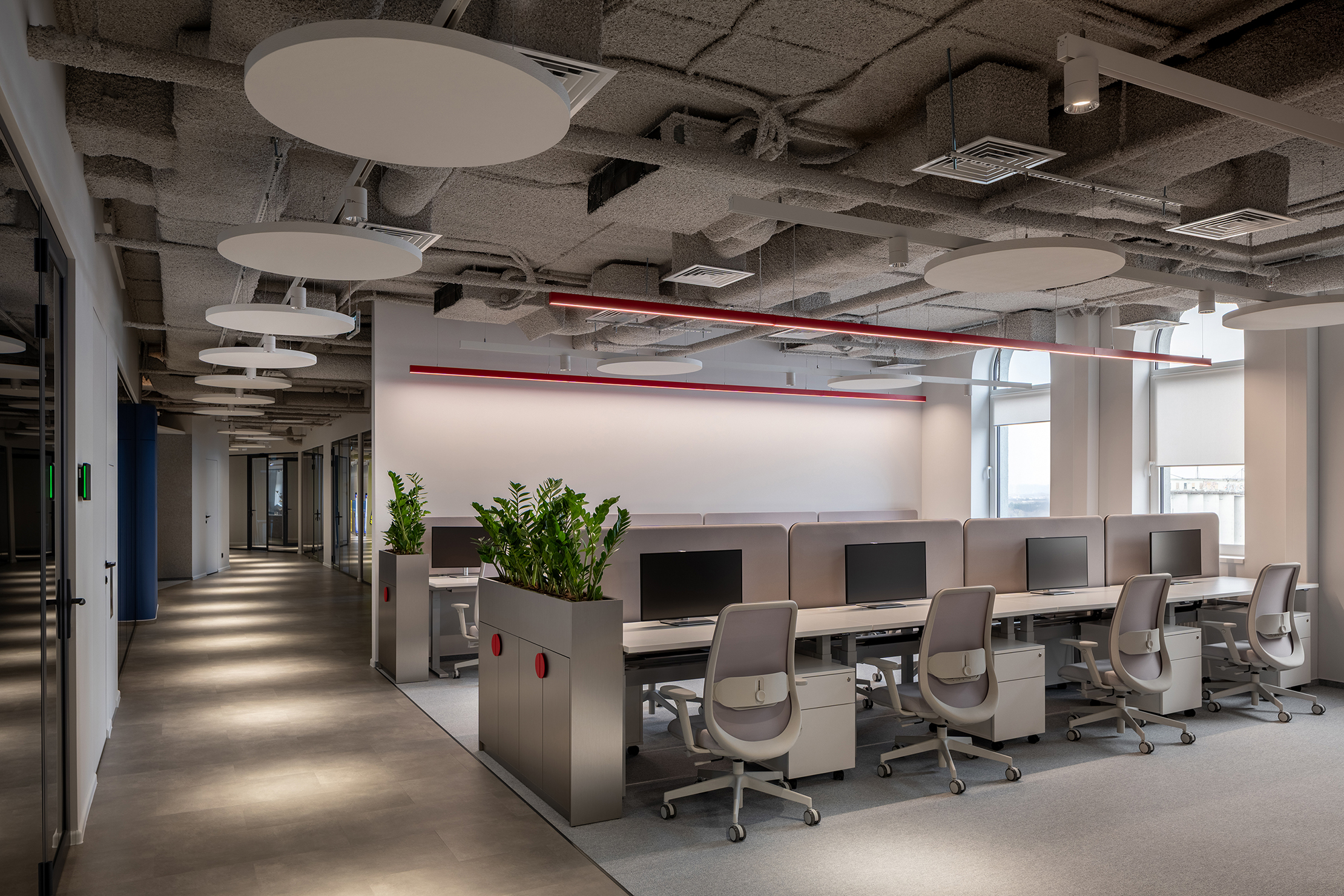
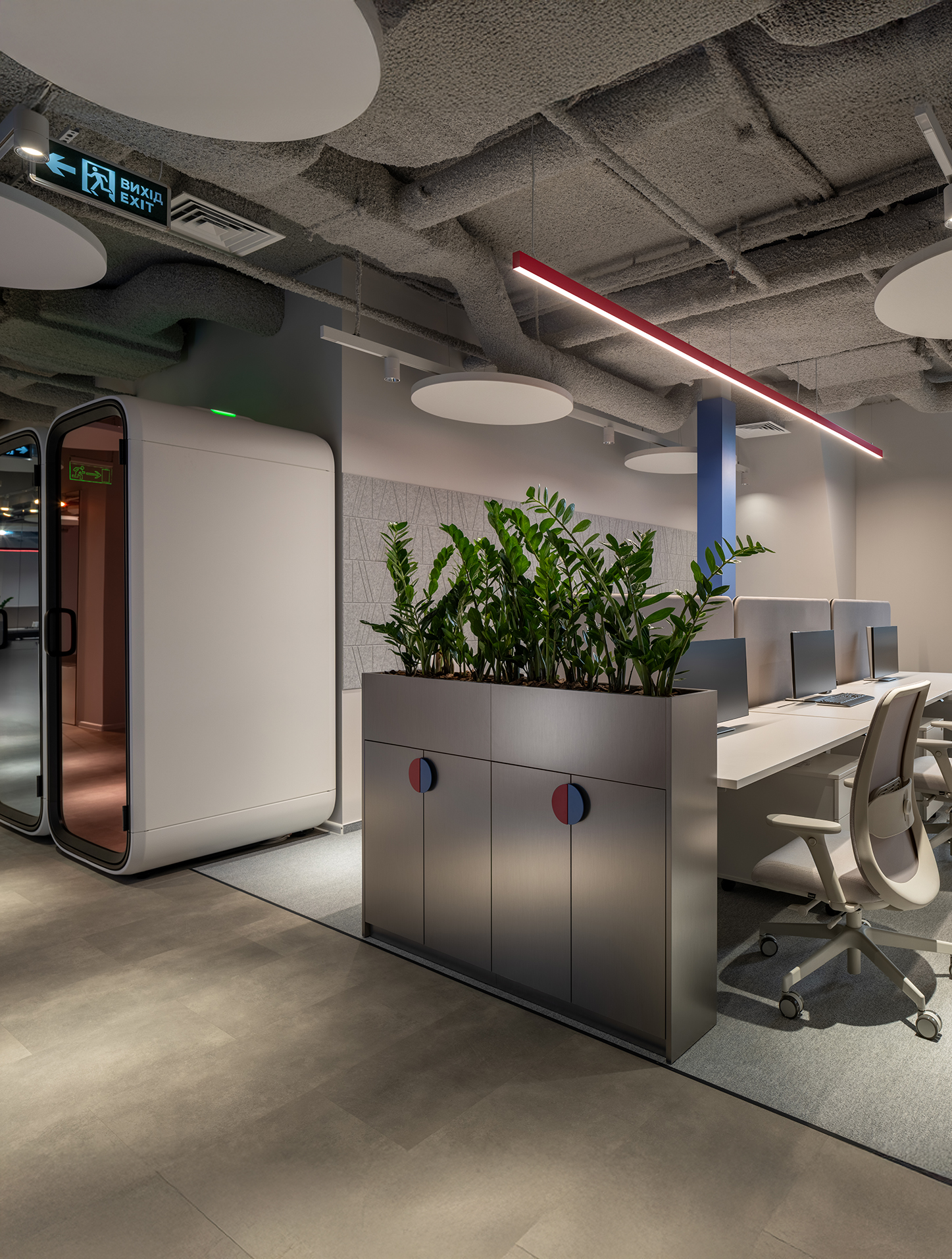
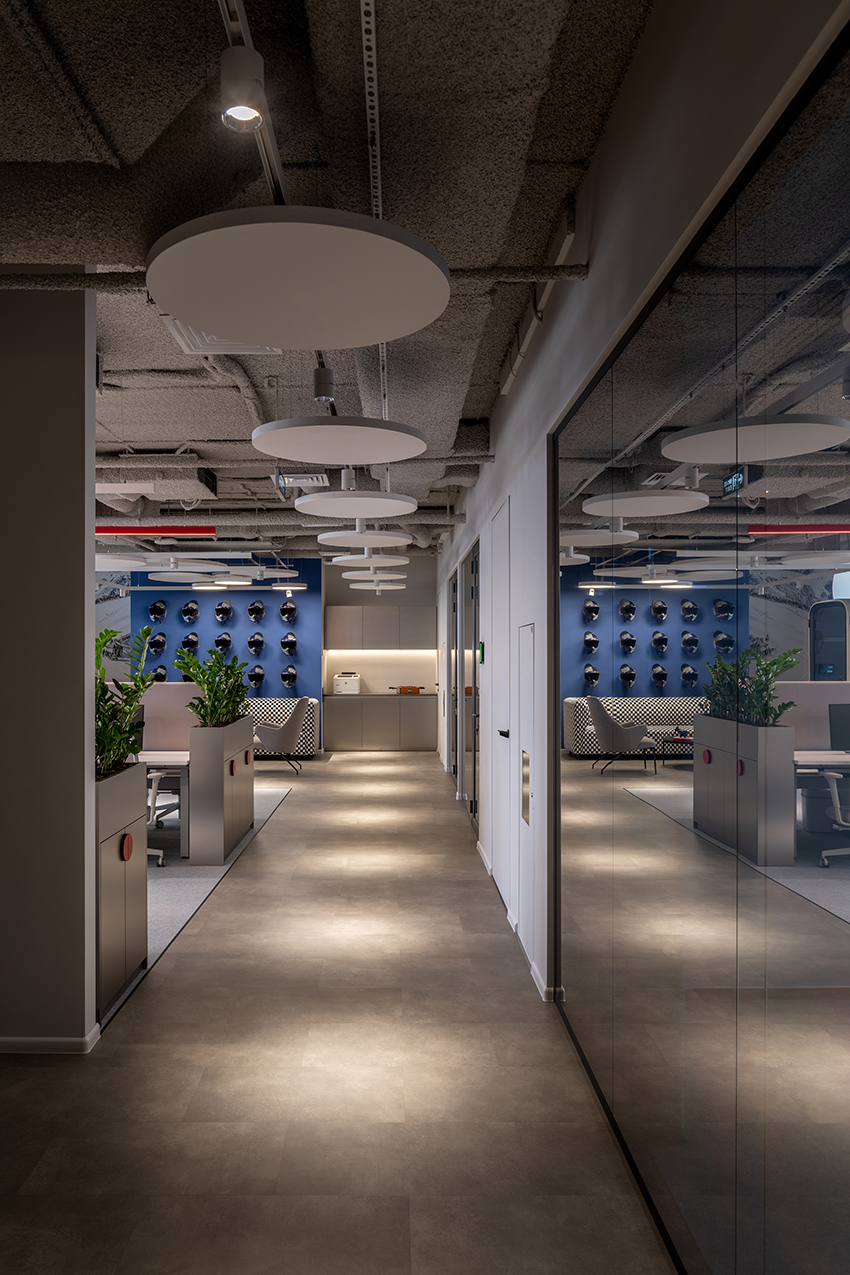
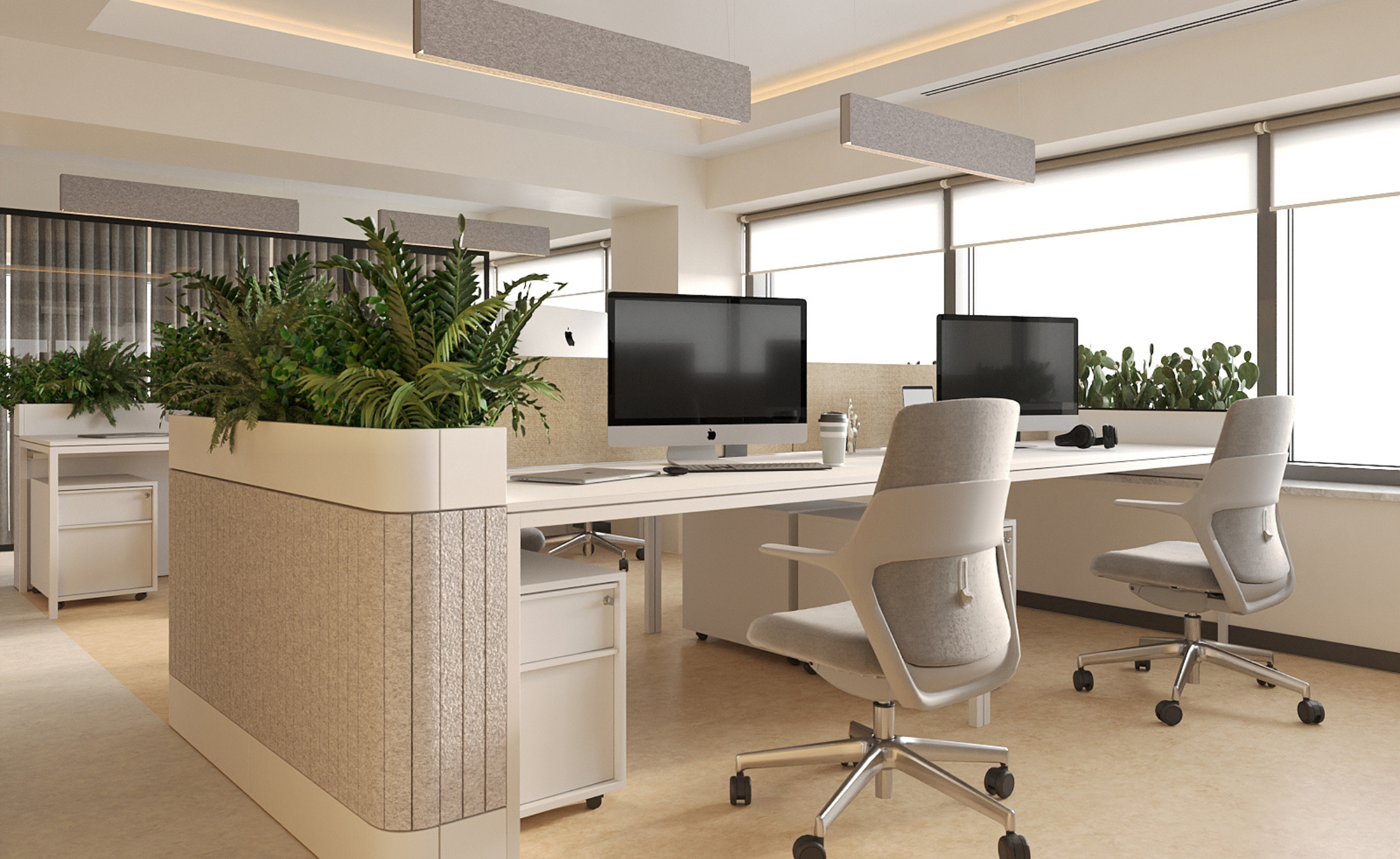
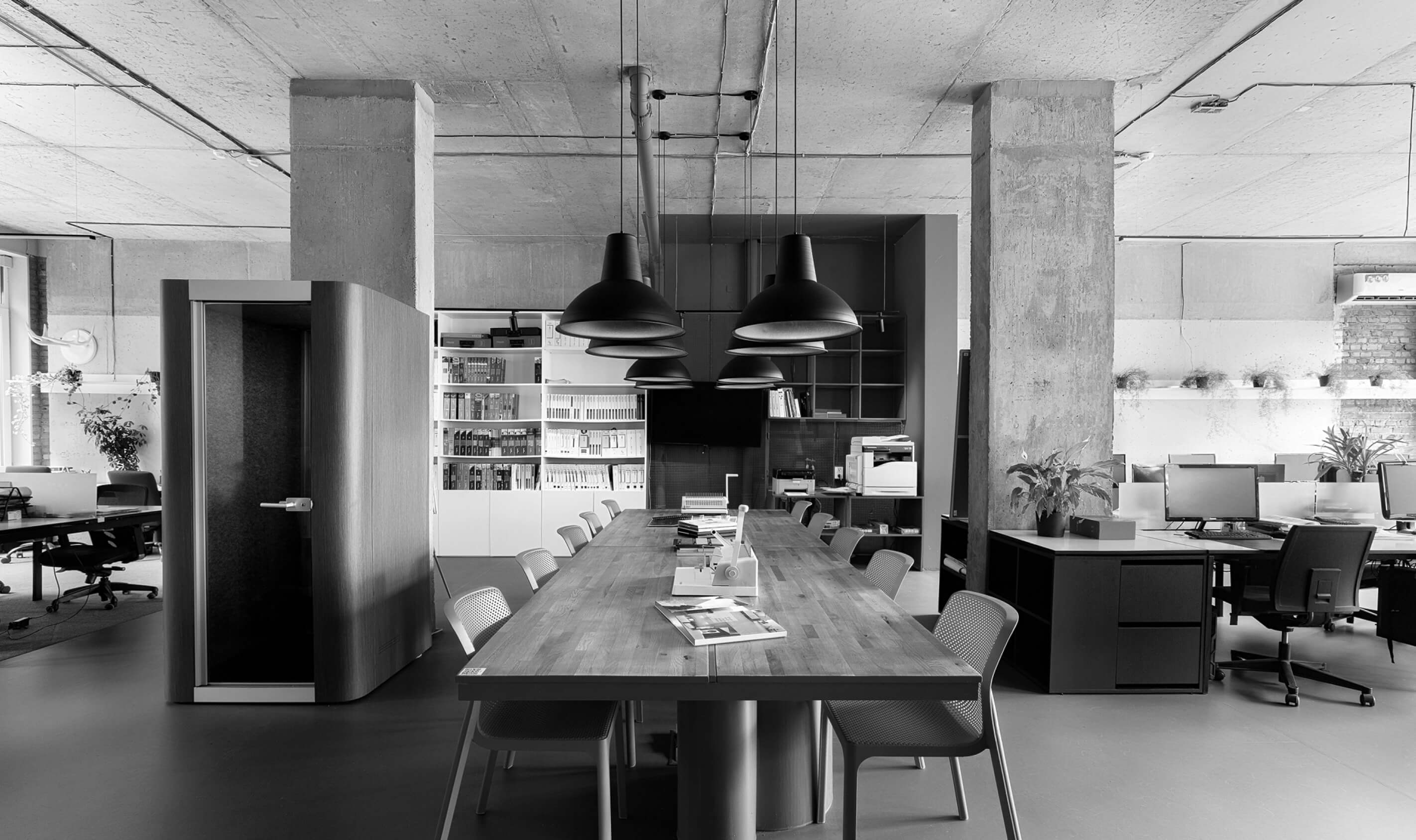
Workstations are arranged logically, without rigid barriers. The space is flexible and easy to reconfigure. Linear lighting on the ceiling works as visual guidance.
The open workspace is designed for movement—people don’t stay static. Whether sitting, standing, or gathering for a quick chat, everything is organized to allow seamless transitions.
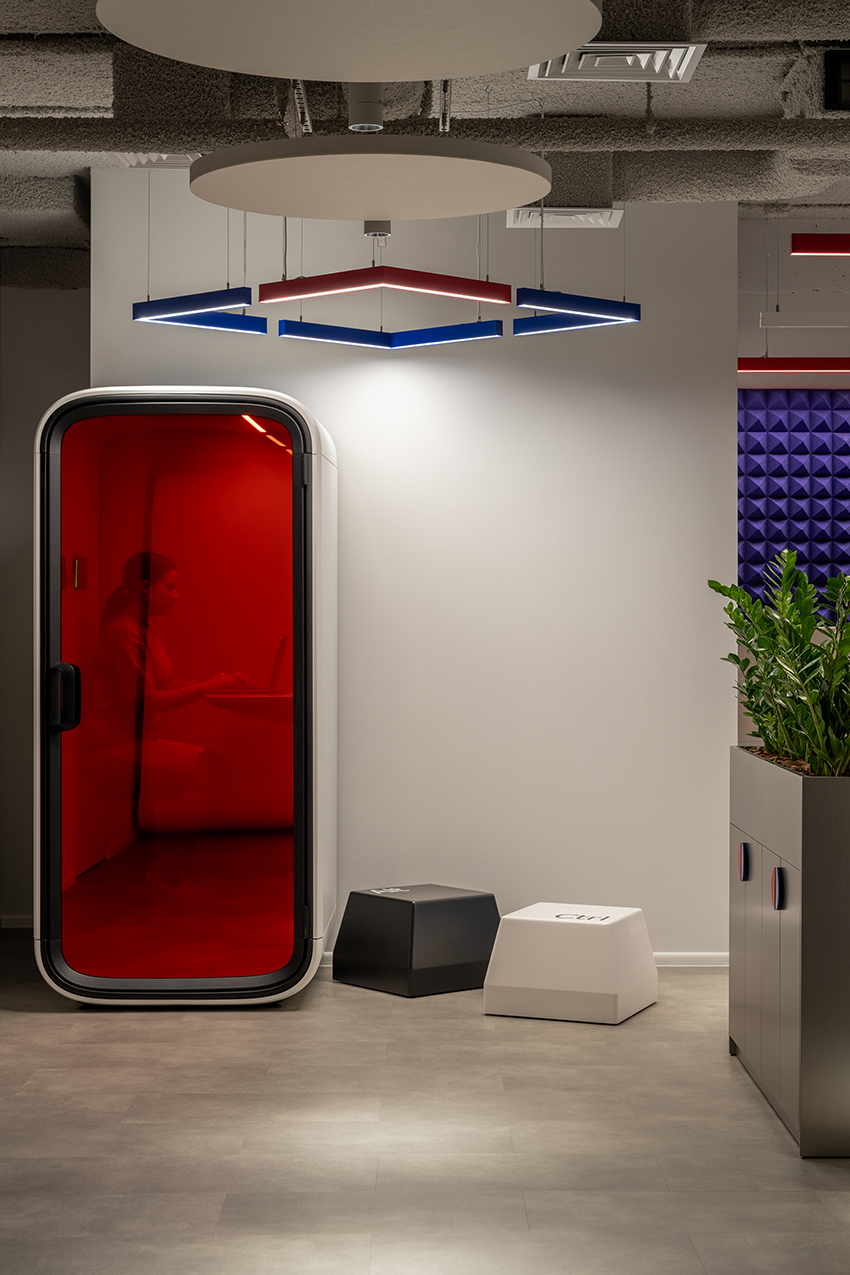
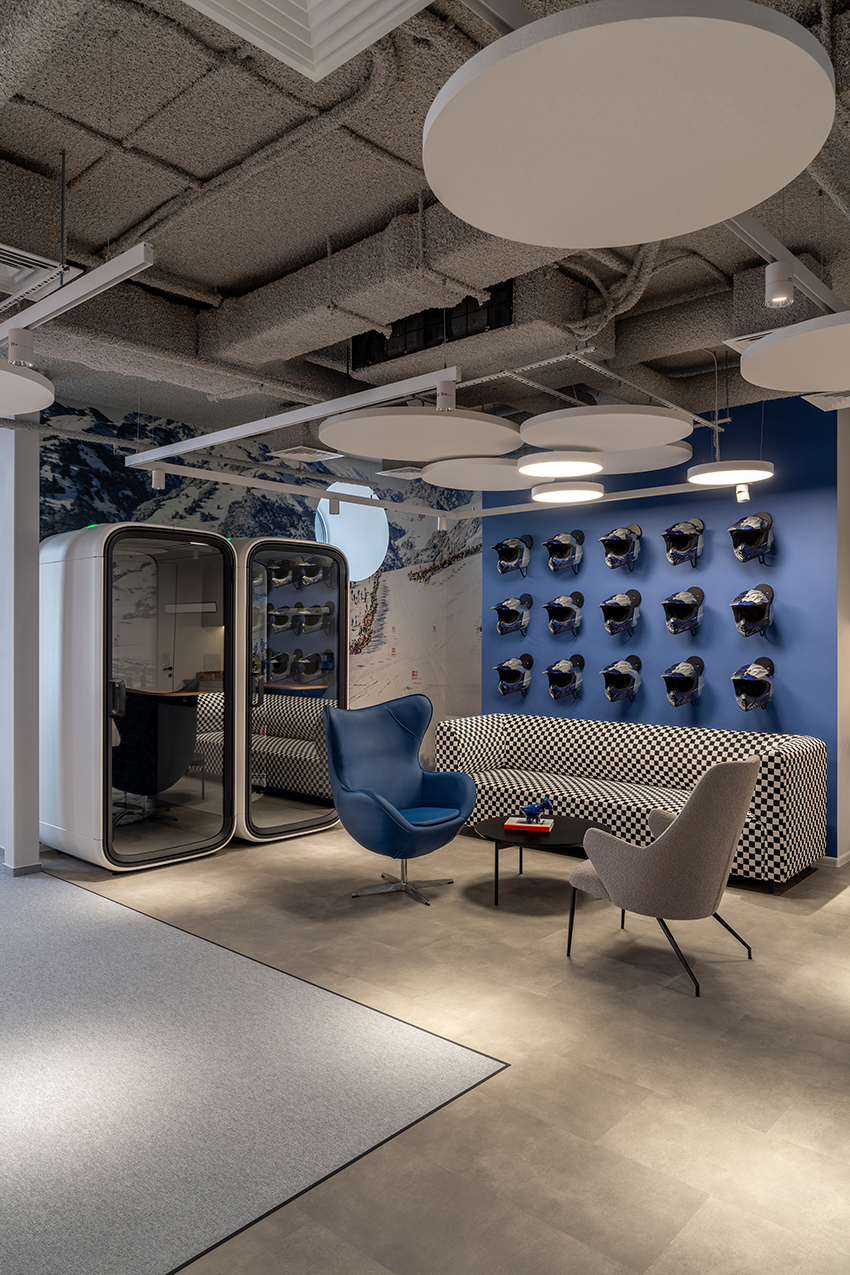
Next to it—a soft area for quick catch-ups or shifting posture without losing focus. There’s a sofa shaped like a finish line and racing helmets on the wall. It’s not about decoration—it’s a quiet signal that keeps the space on tempo.
Meeting & Brainstorm Areas
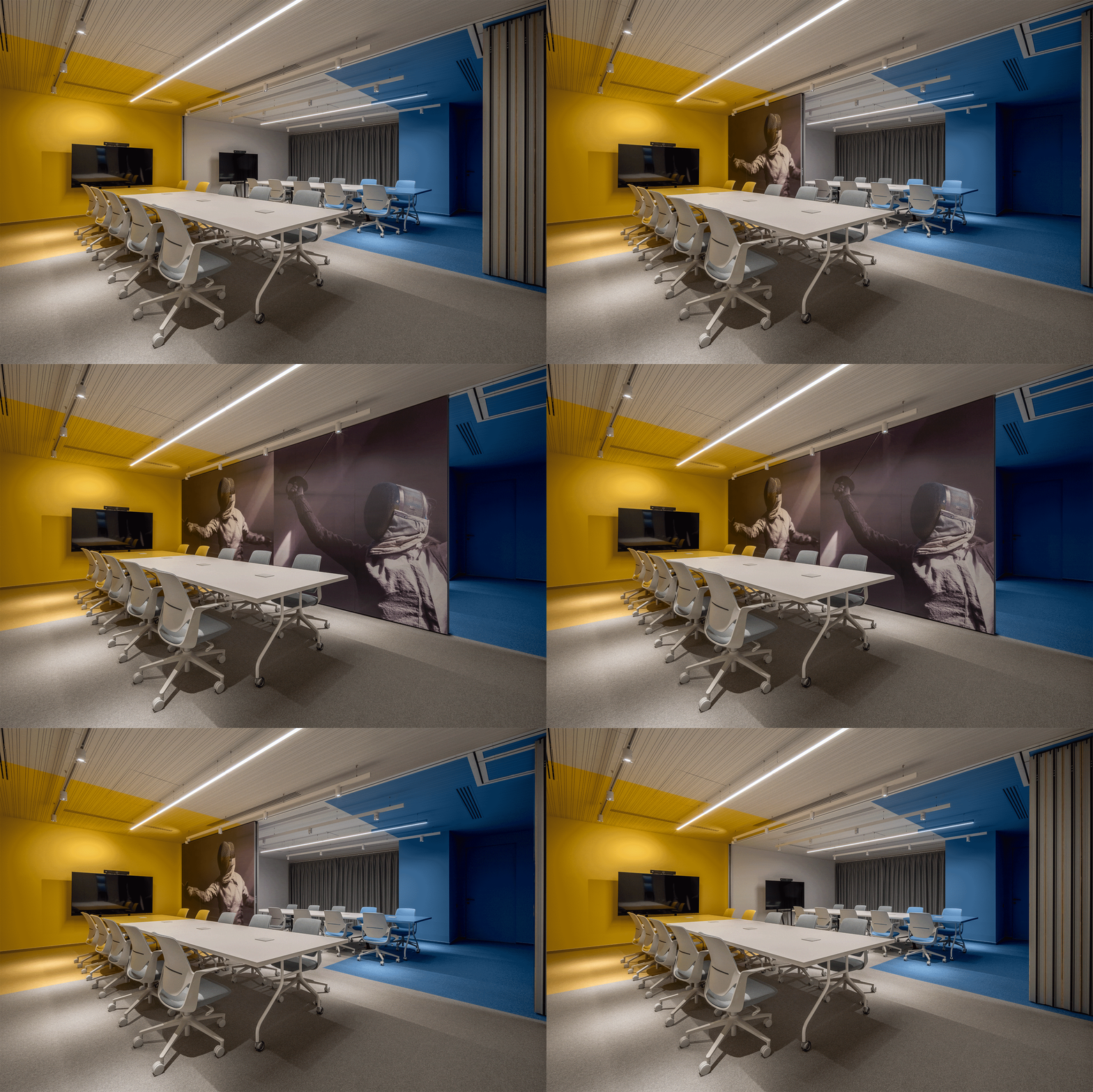
Three rooms. Three moods. One flexible system.
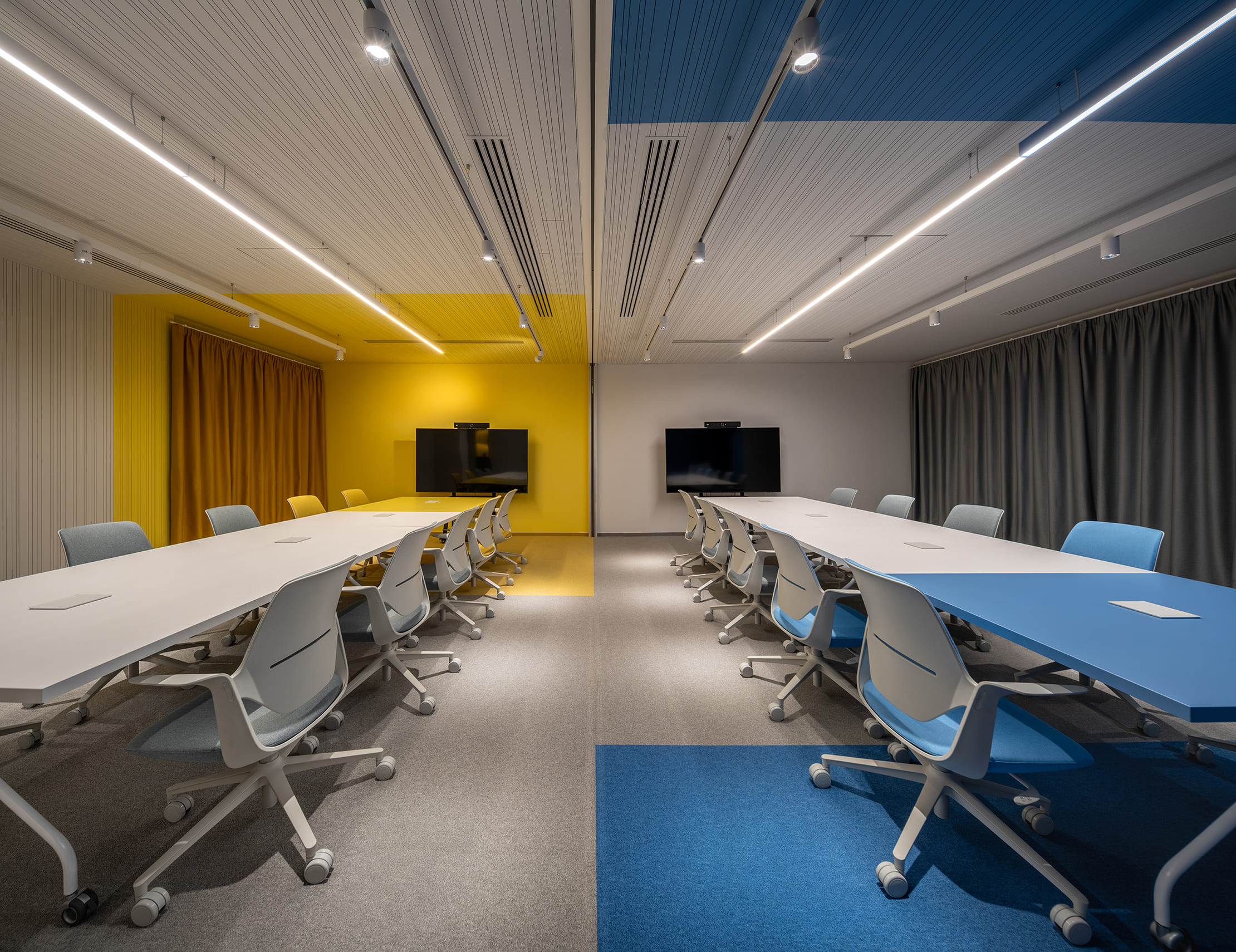
Two meeting rooms can be combined into one large conference area thanks to mobile partitions. The colors—bright yellow and deep blue—are bold but balanced. One wall features a large poster of fencers—a direct and elegant symbol of creative tension and idea clash.
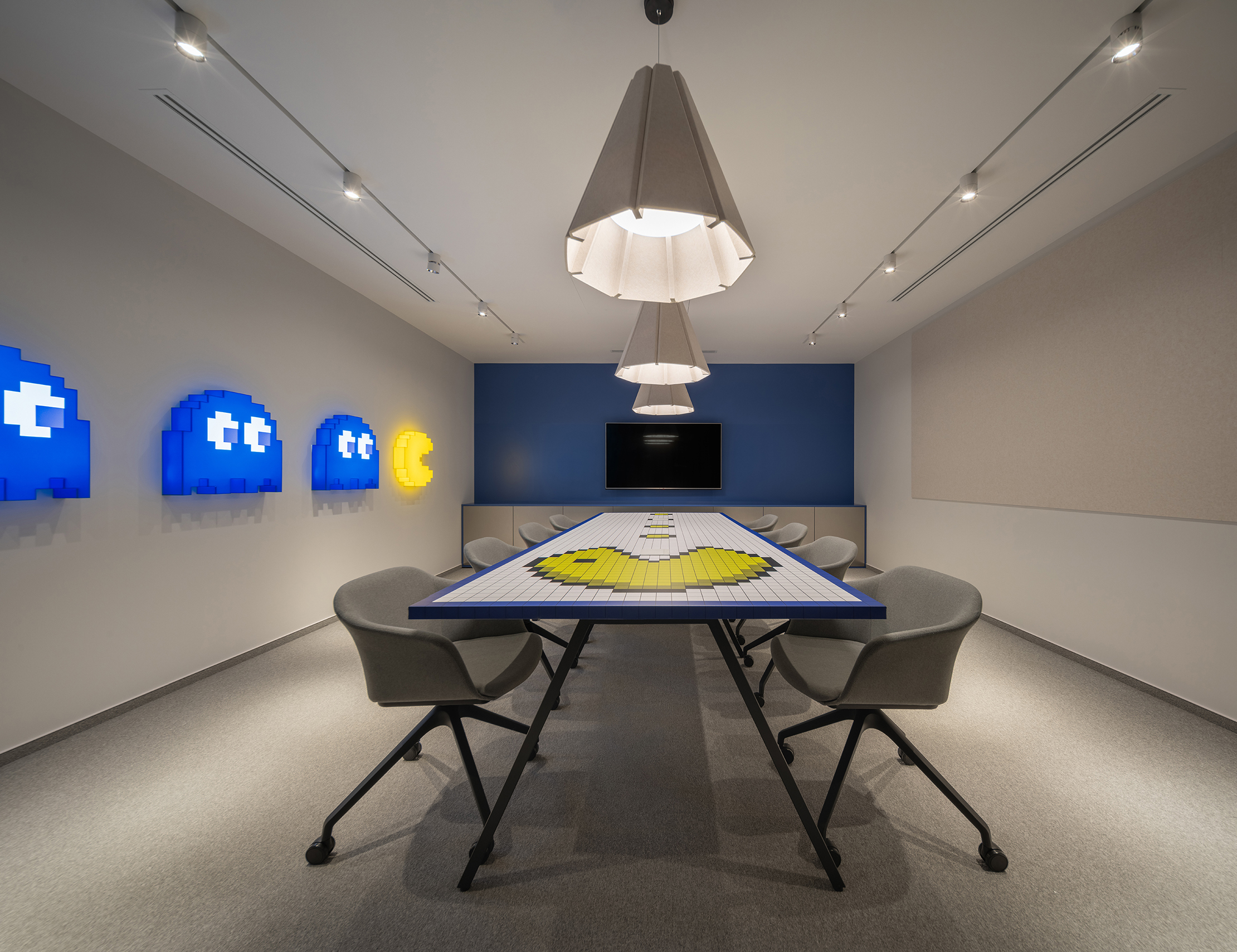
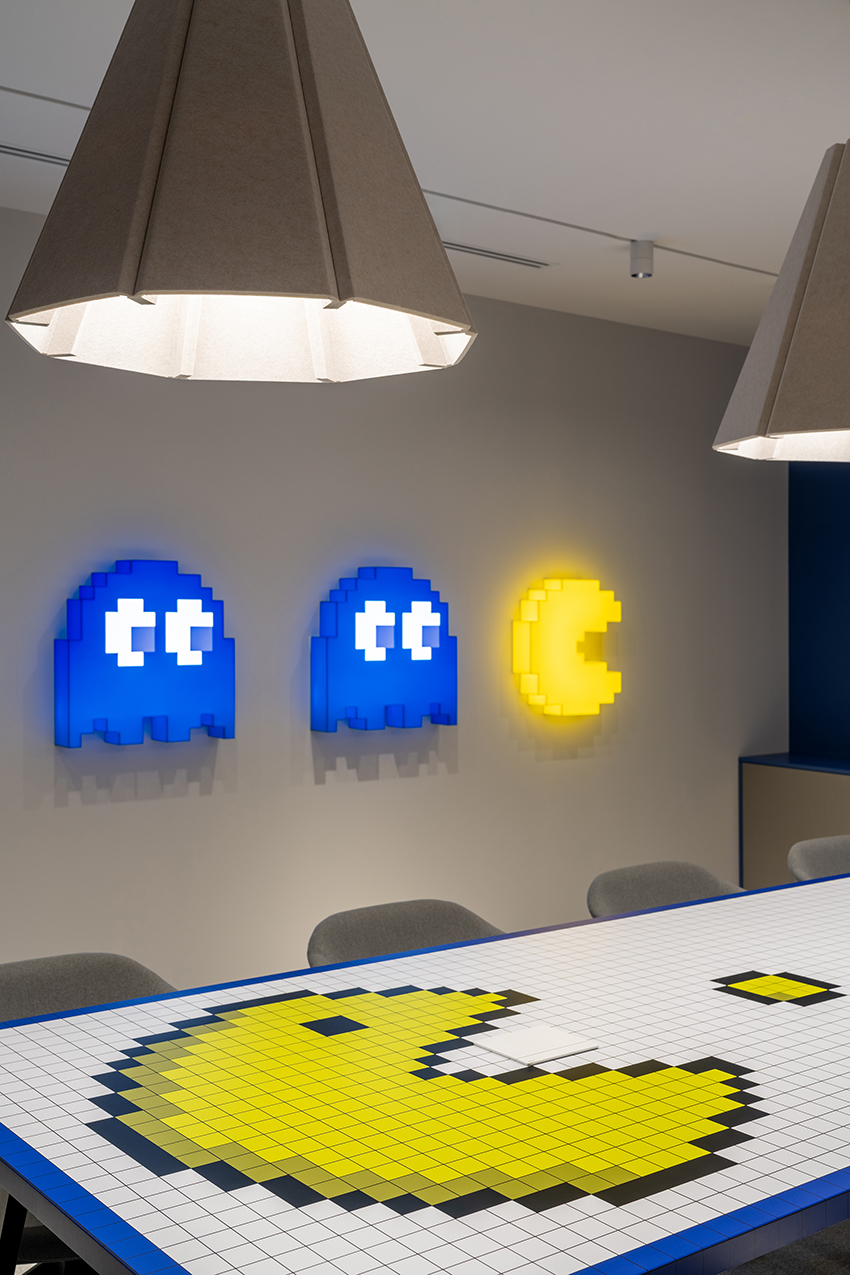
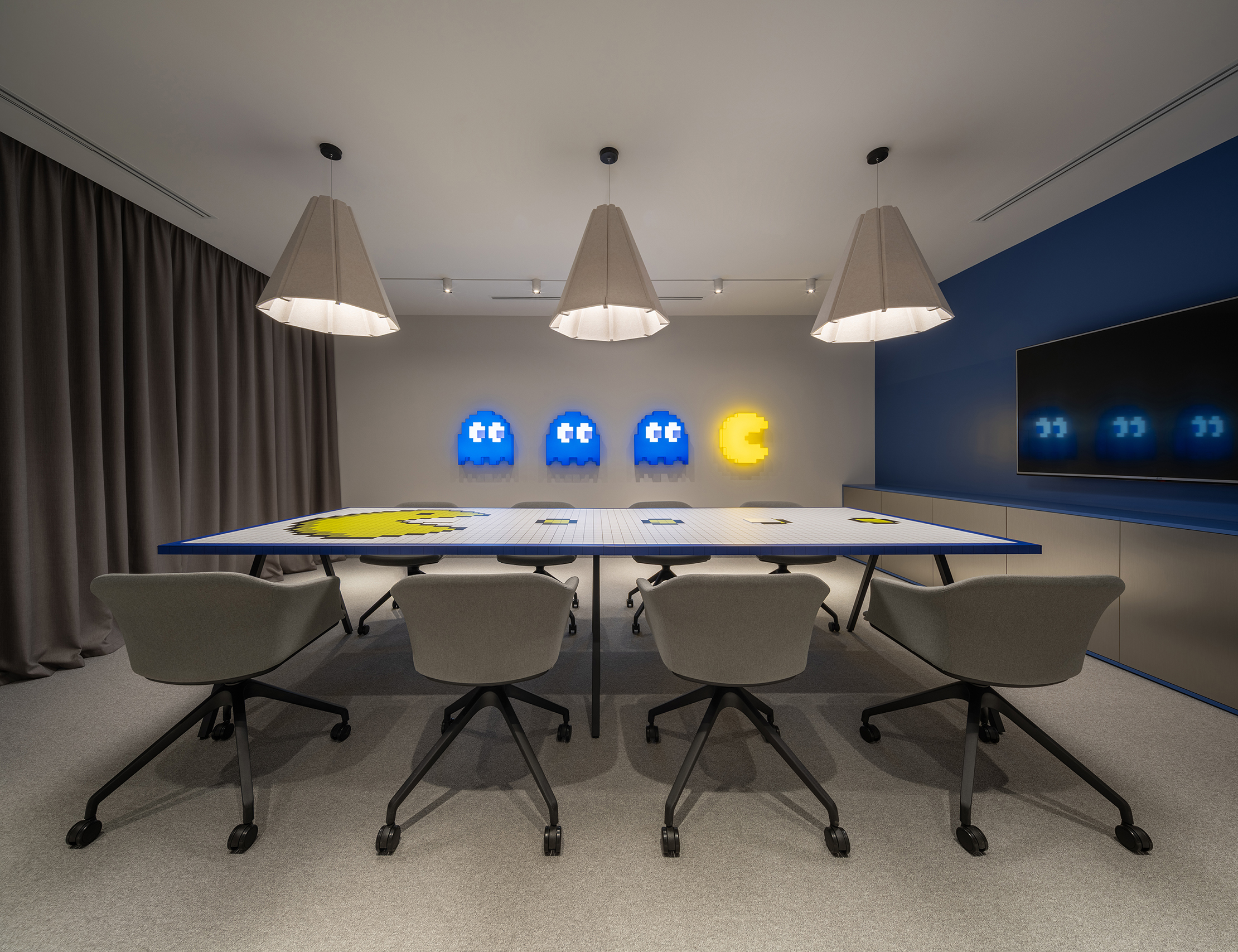
The third room sets a different tone. A Pac-Man-shaped table, neon accents, and an arcade aesthetic. Still functional: with acoustic treatment, professional lighting, and a layout that supports serious conversations—with a different kind of energy.
Private Offices
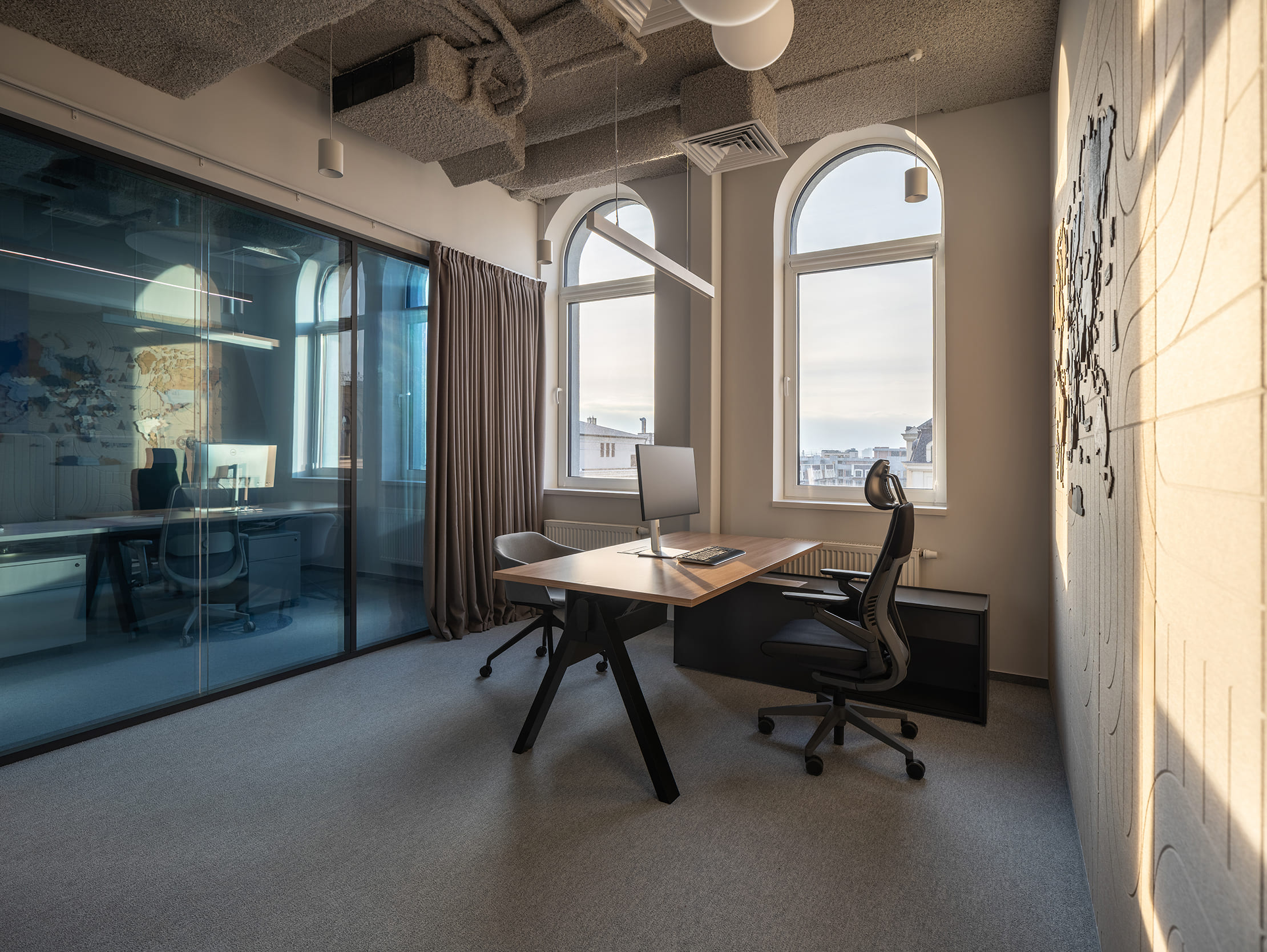
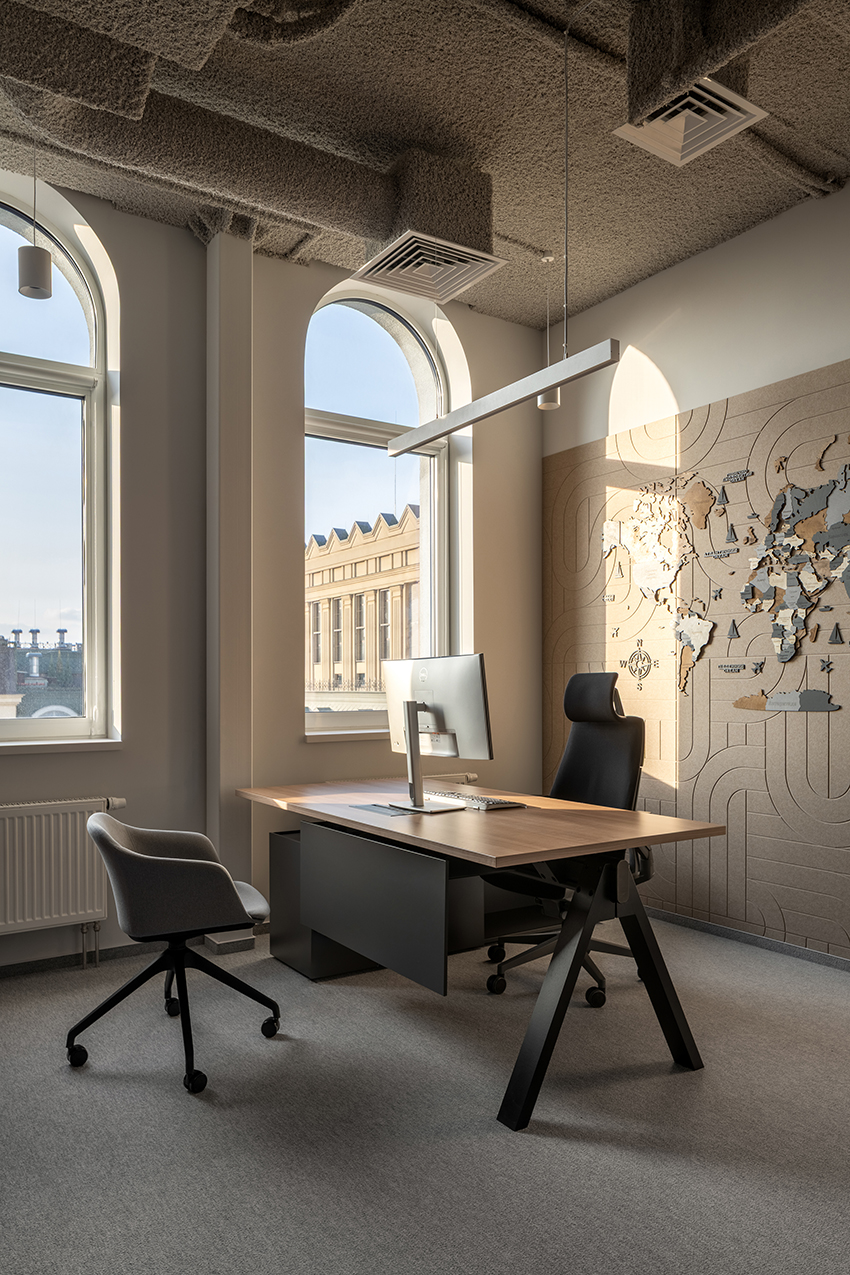
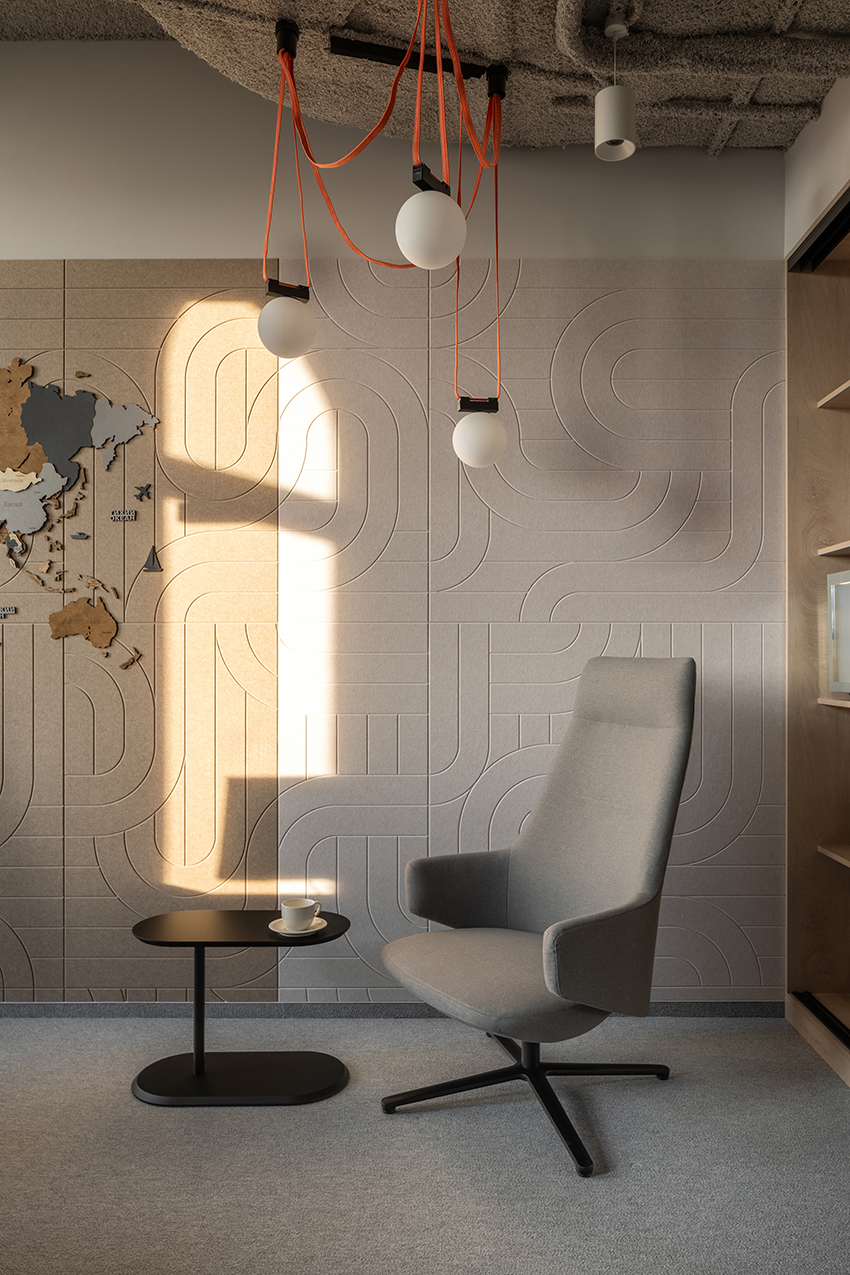
In addition to the open layout, there are several enclosed offices designed for deep focus and one-on-one meetings. These rooms are acoustically separated but visually consistent with the rest of the interior. The materials are softer, the lighting warmer, and the atmosphere calmer—offering a place to concentrate without disconnecting from the rhythm of the workspace.
This project isn’t about style—it’s about states. The space doesn’t dictate how to work. It adapts to the team’s tempo and mindset.
Sport isn’t a theme. It’s a structural logic.
The interior doesn’t distract—it works in sync with the people inside.
Flexible. Dynamic. Focused. Just like the team.
Next
Investment Company Office
185 sq.m.
 Back Back

Calculate the cost
Thank you!
Your quote request has already been sent. We will contact you shortly.

En
Ua